







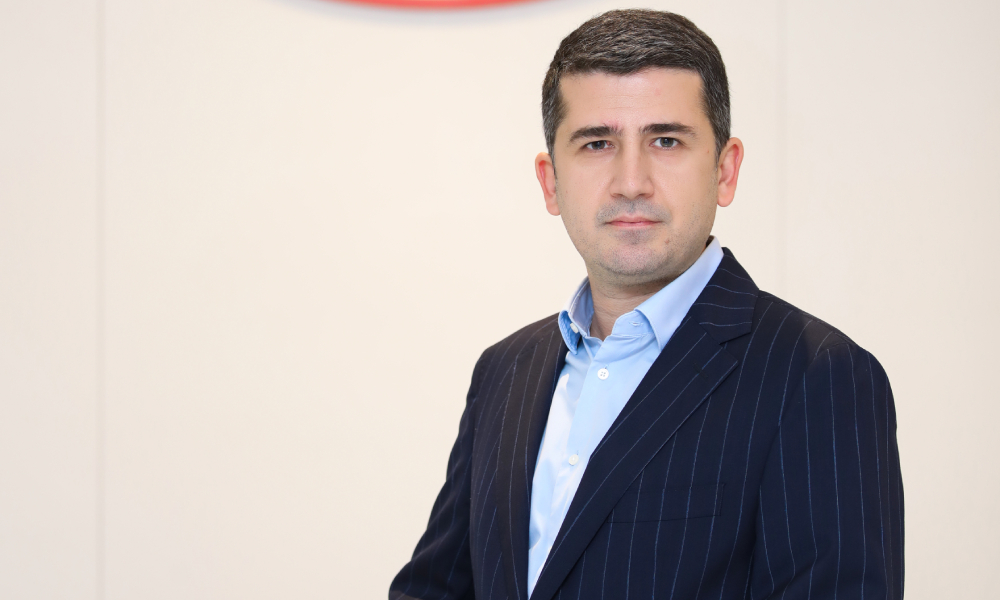
WHO IS HALİL İBRAHİM GÜNDOĞ?
Halil İbrahim Gündoğ, born in Gaziantep in 1987, began his career in 2014 at Henkel, which was also his first professional experience, as a Regional Sales Representative in Gaziantep after completing his military service. Over the years, he gained experience by taking on various roles in sales and business development. Today, Sales Director of Consumer Adhesives, Adhesive Technologies, Henkel Turkey. Married and the father of a daughter, he also holds responsibilities at the IMEA regional level as well as globally.
With a history spanning more than 150 years, Henkel provides technology solutions that support the production processes of many industries worldwide. In Türkiye, the company continues to create value together with its customers, particularly in strong industrial sectors such as footwear manufacturing.
◆Which areas do you prioritize in your R&D activities?
Henkel has a very strong global R&D network. In the footwear sector, our R&D efforts focus primarily on three key areas: sustainable chemistry (systems that reduce solvent use and have a lower environmental impact), production efficiency (adhesive technologies that dry faster and are compatible with automated production lines), and adaptation to new materials (solutions designed for next-generation materials increasingly used in footwear manufacturing). Through this approach, we provide our customers not only with products, but also with technological and engineering support that enhances their production processes.
◆Türk Henkel’s production facility in the Gebkim Organized Industrial Zone stands out as an important center for footwear and industrial adhesives. Could you explain the strategic role of this factory for both Türkiye and the region, as well as the production and technical development activities carried out there?
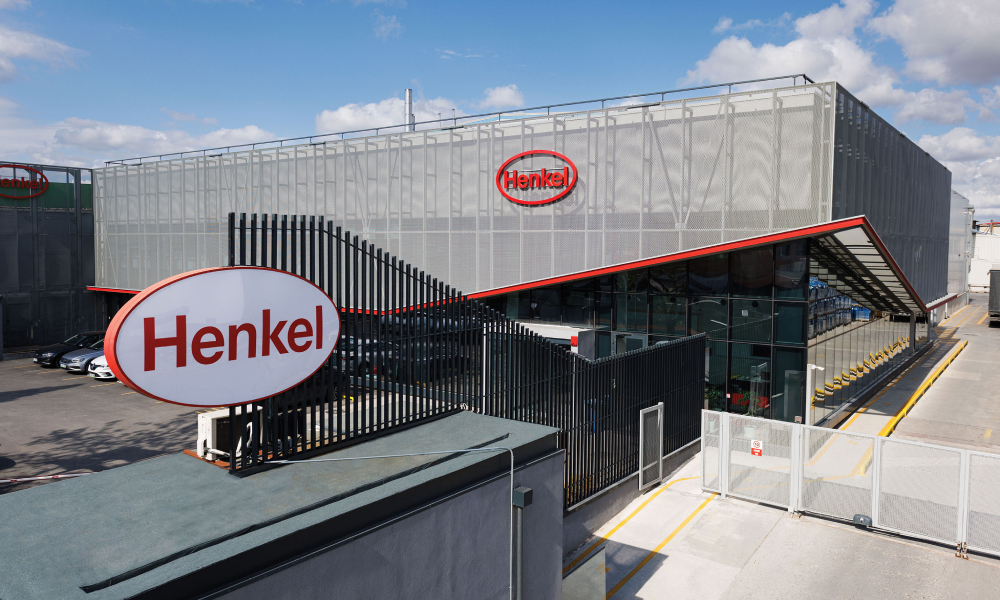
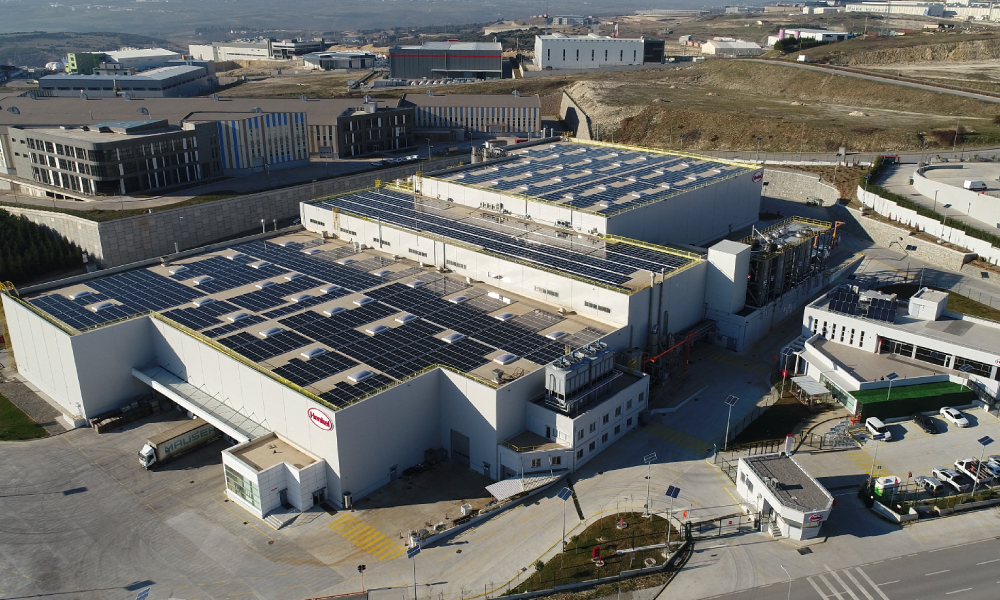
At Henkel, we position Türkiye not only as a market but also as a regional production and technology hub. Our facility located in the Gebkim Organized Industrial Zone in Kocaeli is one of the most important examples of this vision.
Today, our Gebkim factory is the largest adhesive production facility in the Middle East. It has also been designed with a strong focus on sustainability and operates with a carbon-neutral production approach. For us, this represents not only significant production capacity but also an important step in terms of environmental responsibility.
Another key feature of this facility is that adhesive solutions developed and produced locally in Türkiye are supplied both to domestic and regional markets. Our Gebkim plant plays a critical role particularly as a production center for water-based and more environmentally friendly product technologies. In addition, our technical center and advanced laboratories, where our application engineering teams work, are also located at this site. This allows us to collaborate closely with our customers to develop solutions tailored to their production processes and to bring new products to market much more quickly.
In short, our Gebkim facility stands as a strategic hub that strengthens Henkel’s presence in Türkiye while enhancing our regional technology development capabilities.
◆What transformation or development in the sector has excited you the most?
The footwear industry has been undergoing a rapid transformation in recent years. In particular, the growth of the sports footwear segment, the increasing level of automation, and the rising expectations for sustainable production have significantly changed the technological needs of the sector.
Today, manufacturers expect not only strong bonding performance, but also faster production lines, lower energy consumption, more environmentally friendly chemicals, and more sustainable quality standards. At Henkel, we are positioned at the center of this transformation. Thanks to our global R&D network, we continuously develop innovative solutions to meet the evolving needs of manufacturers. Our environmentally friendly water-based footwear adhesives, which we have recently introduced to the Turkish market, are one of the best examples of this approach.
◆How do you evaluate the current position of Türkiye’s footwear industry as Türk Henkel?
Türkiye has long had a strong culture of footwear manufacturing. In recent years, however, the role of the sector has begun to evolve further. Proximity to the European market, flexible production capabilities, and a skilled workforce are increasingly positioning Türkiye as an important manufacturing hub for many international brands. Today, manufacturers compete not only through production capacity but also through quality standards and their ability to adapt quickly to changing demands. In this sense, Türkiye holds a very advantageous position. As Henkel, we are also part of this ecosystem.
We bring our global expertise together with local manufacturers and provide technologies that help make their production processes more efficient.
◆What solutions do you offer to the footwear industry in adhesive technologies? What contributions do these solutions provide to production?
As Henkel, we offer footwear manufacturers a broad portfolio of adhesive technologies. These include hot-melt solutions, water-based systems, as well as specialized primers and activation solutions.
These technologies provide manufacturers with several advantages, such as faster production lines, stronger and longer-lasting bonding performance, reliable adhesion between different materials, and reduced solvent usage.
◆Could you provide information about Henkel’s solutions for sports footwear and vulcanized shoes?
Sports footwear production is a highly complex process in which multiple materials are combined. Different surfaces such as textiles, EVA, TPU, and rubber need to be bonded securely.
On the vulcanized footwear side, we develop systems that are compatible with production processes operating under high temperature and pressure. These solutions offer significant advantages in terms of bond strength, flexibility, and long-term durability.
At Henkel, we provide specially developed adhesive technologies for these applications. These solutions ensure high bonding performance while also enabling faster processing times on production lines.
◆Materials used in footwear production are changing rapidly. How does this affect adhesive technologies?
Today, the range of materials used in footwear manufacturing is much broader than in the past. As expectations for lightness, durability, and comfort increase, the variety of materials used continues to expand. EVA foams, TPU-based components, and recycled materials are good examples of this trend.
This diversity also makes production processes more complex, as each material has its own surface characteristics and behavior. Therefore, adhesive solutions must be able to adapt to this wide range of materials.
At Henkel, a significant part of our R&D efforts focuses on developing systems compatible with these new materials. In this way, manufacturers can achieve strong bonding performance while maintaining stable quality in their production processes.
Adhesives will continue to be the critical technology that enables different materials to be securely bonded together.
◆How critical is adhesive selection in the production process?
Consumers who purchase footwear usually focus on design, color, or comfort. However, the durability and long-term performance of the product largely depend on the technologies used during manufacturing. Adhesives play an invisible but crucial role at this point. When the right system is used, different materials can be securely bonded, ensuring that the product maintains its performance throughout its lifecycle.
Sometimes even a small improvement in adhesive formulation can create a significant increase in production efficiency. For example, optimizing open time, reducing drying time, or achieving more stable bond strength can have a major impact on both production speed and overall quality. For this reason, we do not see adhesives merely as chemical products, but as technologies that optimize manufacturing processes.
In addition, adhesive selection has a direct impact on efficiency along the production line. Systems that deliver stable performance help reduce potential production errors and allow the manufacturing process to run more smoothly. For this reason, adhesive technologies are in fact one of the most critical elements operating behind the scenes of production.