




Drawing on aggregated signals from more than 300 million learners across Coursera and Udemy, alongside national readiness metrics from Oxford Insights’ Government AI Readiness Index, the eighth edition of the Global Skills Report tracks the convergence of automation and executive judgment.
Turkey's index position coincides with significant talent development: Stanford’s AI Index 2026 recorded a 75% rise in Turkey's AI talent concentration between 2019 and 2025, supported by the national 2026–2030 AI Action Plan aiming to reach 5 million citizens through literacy programs alongside training 10,000 advanced specialists.
Specialized AI Demand: Safety and Autonomous Agents
Total enrollments in AI curriculum throughout Turkey expanded by 29% year-over-year:
AI Safety & Alignment: Enrollments jumped by 275%.
Agentic AI & Workflows: Registrations for autonomous agent design and system orchestration rose 158%.
Generative AI Foundations: Grew by 107% year-over-year.
Core Technical Domains: Machine learning foundations, prompt engineering, and proprietary Large Language Model (LLM) fine-tuning.
Cognitive Capabilities: 76% Surge in Complex Problem Solving
Turkish learners are concurrently investing in complementary behavioral and cognitive skills necessary to audit and govern algorithmic outputs:
Complex Problem Solving: Grew by 76% year-over-year.
Innovation & Ideation: Expanded by 33%.
Critical Thinking: Increased by 10%.
A notable finding is the high correlation between strategic thinking and decision-making and three key technical tracks: agentic AI, workflow orchestration, and LLM deployment. This pairing indicates that enterprise professionals increasingly evaluate algorithmic recommendations against institutional targets rather than relying on automated outputs without critical review.
Micro-Credential Adoption for 2030 Readiness
Aligned with World Economic Forum data showing that Turkish employers expect 44% of core workforce skills to transform by 2030, verified skill validation is accelerating. Micro-credential enrollments across Turkey increased by 38% overall, with AI-specific micro-credentials climbing 62%.
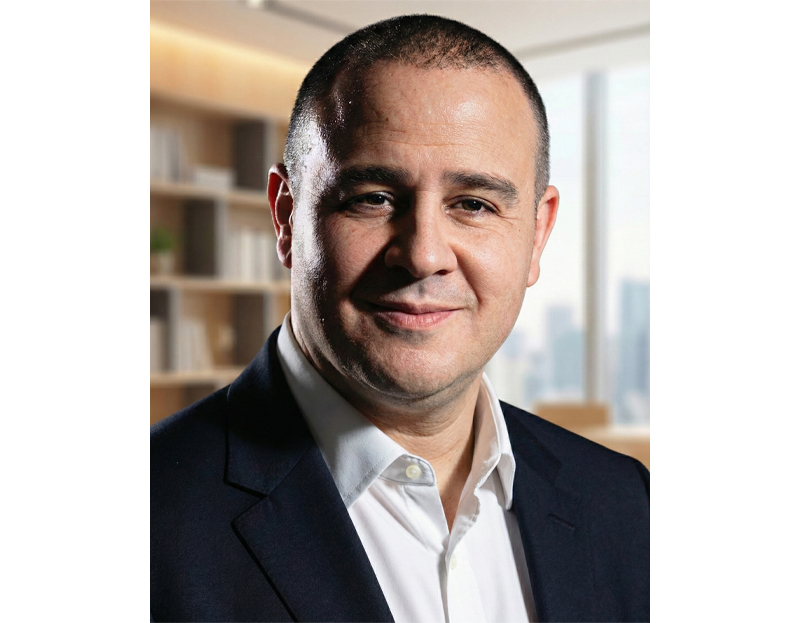
Executive Perspective from Kais Zribi
Kais Zribi, General Manager for the Middle East & Africa at Coursera, commented:
The next phase of Turkey’s AI progression will hinge on how effectively institutions convert emerging capabilities into sound decisions and bottom-line impact. Learning must bridge technical fluency with the executive judgment required to define where and how AI adds authentic value. By structuring role-based learning pathways mapped directly to real workplace problems, employers and academic institutions can translate national AI readiness into productivity and inclusive growth.