



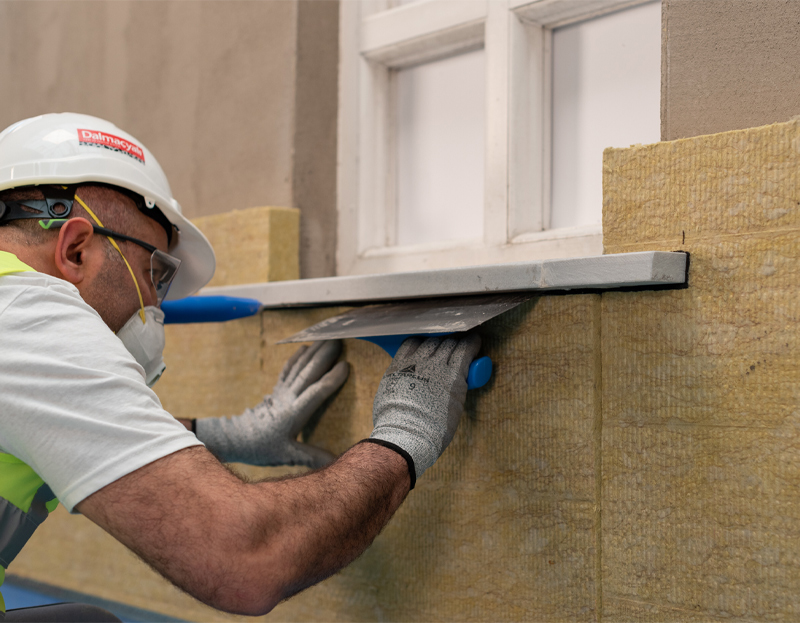
In Turkey, buildings account for roughly 37% of gross national energy consumption—surpassing industrial manufacturing—with 80% of building energy allocated strictly to space heating and cooling. With the country importing approximately 70% of its primary energy and residential structures utilizing roughly 35% of those imports, retrofitting the national building inventory through advanced external thermal insulation systems presents an annual macroeconomic savings potential of $10–12 billion.
While uninsulated properties often exhibit temperature variances of 8–10°C between northern and southern facades, Dalmaçyalı Advanced Thermal Insulation Systems narrow this differential to less than 1°C, stabilizing indoor thermal environments. Measured deployments confirm up to 60% reductions in winter heating fuel consumption across cold climate zones like Erzurum, while yielding substantial drops in summertime air conditioning electricity demand in high-temperature coastal regions like Marmaris.
TRY 147 Billion in Natural Gas Savings Since 2003
Macroeconomic and environmental milestones recorded by Dalmaçyalı over two decades:
290+ Million Square Meters Applied: Reaching over 3 million residential units and roughly 12 million occupants since 2003.
15.5 Billion Cubic Meters of Gas Conserved: Cumulatively abating 15.5 billion cubic meters of imported natural gas, equating to TRY 147 billion in direct economic value.
33 Million Tons of Carbon Abatement: Mitigated over 33 million tons of greenhouse gas emissions, representing approximately 24 times the annual carbon sequestration capacity of the Bolu forest ecosystems.
Updated TS 825 Alignment and Aerial Diagnostics
Technical compliance and field diagnostics capabilities:
Full TS 825 Alignment: Formulations and panel specifications meet the revised TS 825 Thermal Insulation Requirements for Buildings, which incorporates summer cooling metrics and increases standard insulation thickness baselines by 3–5 cm.
Drone and Infrared Diagnostics: With approximately 70% of Turkey's current building inventory lacking verified thermal insulation, technical teams deploy drone flights and radiometric thermal imaging across 81 provinces to detect air leaks, damp spots, and envelope degradation.
System-on-System Overcladding: For existing structures equipped with sub-optimal insulation depths, technical assessments evaluate existing substrate integrity to allow direct overcladding for enhanced thermal resistance.