
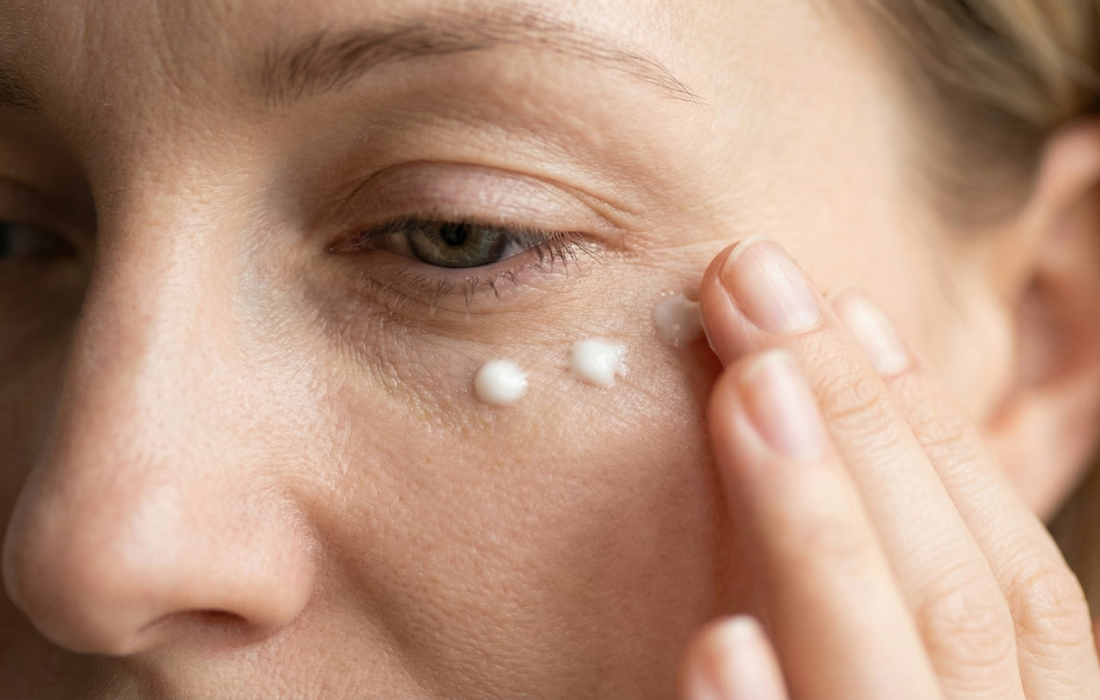
After an exhausting night or during periods of intense work, the eye contour is typically the first area to show signs of fatigue. Dark circles—which create a worn, aged, and dull expression—are a universal frustration that almost everyone seeks to resolve at some point. This demand drives beauty brands to flood retail shelves with eye creams claiming to "instantly brighten" or "erase dark circles."
A large portion of consumers see little to no difference despite diligent daily application. This failure does not stem from bad formulations, but rather from a fundamental mismatch between the biological origin of the dark circles and the active chemistry inside the jar. Dark circles are not monolithic; they divide into distinct vascular, pigmentary, and structural categories.
Why Is the Undereye Area So Uniquely Delicate?
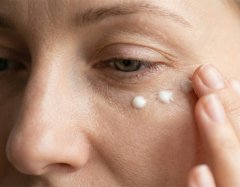
The skin of the eyelids and under-eye area is roughly three to five times thinner than the skin across the rest of the body. Sebaceous glands are virtually absent here, while collagen and elastin scaffolding remains minimal.
Because this tissue is translucent and paper-thin, underlying capillaries, blood pooling, and orbital bone margins project directly onto the surface. Furthermore, the eye contour endures thousands of micro-contractions daily through blinking, squinting, and facial expressions. This anatomical vulnerability ensures that any circulatory slowdown or pigment buildup becomes immediately visible to the naked eye.
Which Type of Dark Circles Do You Have? Self-Assessment Guide
Before committing to an eye cream, understanding the visual tone and structural behavior of your dark circles is essential.
Vascular Dark Circles: These present primarily with blue, purple, or pinkish undertones. They originate from sluggish microcirculation in capillaries directly beneath the surface, where oxygen-depleted blood pools. When you gently pull the under-eye skin taut with your finger, if the discoloration lightens or disappears, the cause is vascular. Sleep deprivation, allergies, blue light exposure, and sinus congestion amplify this type.
Pigmentary (Melanin-Induced) Circles: These appear as distinct brown, yellowish, or grey patches. They stem from excess melanin deposits concentrated in the upper layers of the epidermis. When stretching the skin, the dark hue does not dissipate; it simply moves along with the skin. Genetics, UV exposure, chronic eye rubbing, and eczema are primary catalysts for pigmentary pooling.
Structural (Shadow-Based) Dark Circles: Some individuals naturally possess a deep-set orbital rim, or they experience age-related loss of the sub-orbicularis fat pad. The resulting tear trough depression casts a shadow under overhead lighting. If illuminating the face directly from the front substantially reduces the darkness, the issue is an optical shadow caused by volume depletion, not skin staining.

Which Ingredients Address Which Type of Circle?
Navigating the beauty aisle requires bypassing front-label marketing claims in favor of reviewing the active ingredient deck on the packaging.
Circulation-Stimulating Caffeine: For blue and purple hues, caffeine remains the most reliable active. Through its vasoconstrictive properties, it helps narrow dilated capillaries, accelerating local blood flow to clear fluid pooling and puffiness.
Brightening Vitamin C and Niacinamide: For brown or pigmentary darkness, ingredients that suppress tyrosinase activity are required. Stable vitamin C derivatives, niacinamide (vitamin B3), alpha-arbutin, and licorice root extract gradually fade excess melanin while brightening the area.
Capillary-Strengthening Vitamin K: For discoloration caused by micro-capillary fragility or localized bruising, vitamin K paired with arnica extracts supports vessel wall integrity to reduce visible redness and purple tones.
Volume-Building Peptides and Retinol: To thicken depleted dermis and stimulate collagen synthesis, low-strength eye-contour retinoids and peptide complexes are the benchmark. As dermal density improves, underlying vascular networks become less visible through the surface.
Limitations That Cosmetic Creams Cannot Fix
While topical eye formulations are a foundational component of a good routine, they cannot duplicate the structural results of medical aesthetics.
Pronounced tear trough hollows, genetic bone depressions, and herniated infraorbital fat pads will not disappear under any topical cream. In these anatomical scenarios, high-end eye products improve hydration and surface texture, but true structural correction requires hyaluronic acid dermal fillers, fractional laser resurfacing, or surgical lower blepharoplasty.
Undereye dark circles are not a uniform concern; distinct physiological mechanisms dictate their appearance and color profile. Blue and purple vascular rings respond best to caffeine and cool compresses, brown patches demand vitamin C and diligent sunscreen application, while thin skin benefits most from peptides and gentle retinoids. Accurately diagnosing what your eye contour actually needs prevents wasted budgets on mismatched formulas and provides the most direct path to a refreshed appearance.