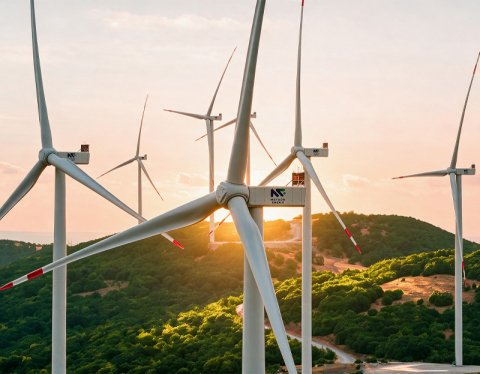







As global clean energy installations accelerate to meet zero-carbon power thresholds, managing the extensive land footprints under wind and utility-scale solar arrays via ecological biodiversity guidelines has surfaced as a core metric within institutional ESG frameworks. Adopting Borusan Group’s corporate sustainability pillars focusing on "Climate, Human, and Innovation," Borusan EnBW Energy, a joint venture combining Borusan Holding and Energie Baden-Württemberg AG (EnBW), has successfully operationalized an exemplary circular agro-photovoltaic framework. Engineered at the Saros Wind and Solar Hybrid Power Plant stretching across the Çan and Merkez districts of Çanakkale, the campaign utilizes a nature-based solution to address vegetative overgrowth affecting solar panel efficiency. Tracked across performance sheets declassified on June 16, 2026, the system verifies that raw heavy-industrial asset deployment can be seamlessly synchronized with traditional regional husbandry to drive macro-level socio-environmental benefits.
Decommissioning Legacy O&M Tactics: Zero Chemical Discharges and Reduced Emissions
Standard practices for vegetative suppression across mega-scale photovoltaic layouts typically dictate heavy reliance on petroleum-fueled mechanical mowing equipment or systemic chemical herbisitler (weedkillers). These methods trigger distinct operational vulnerabilities, including increased carbon emissions, soil microflora degradation, and volatile maintenance expenditures. The model deployed by Borusan EnBW Energy replaces these traditional liabilities with an automated biological cycle:
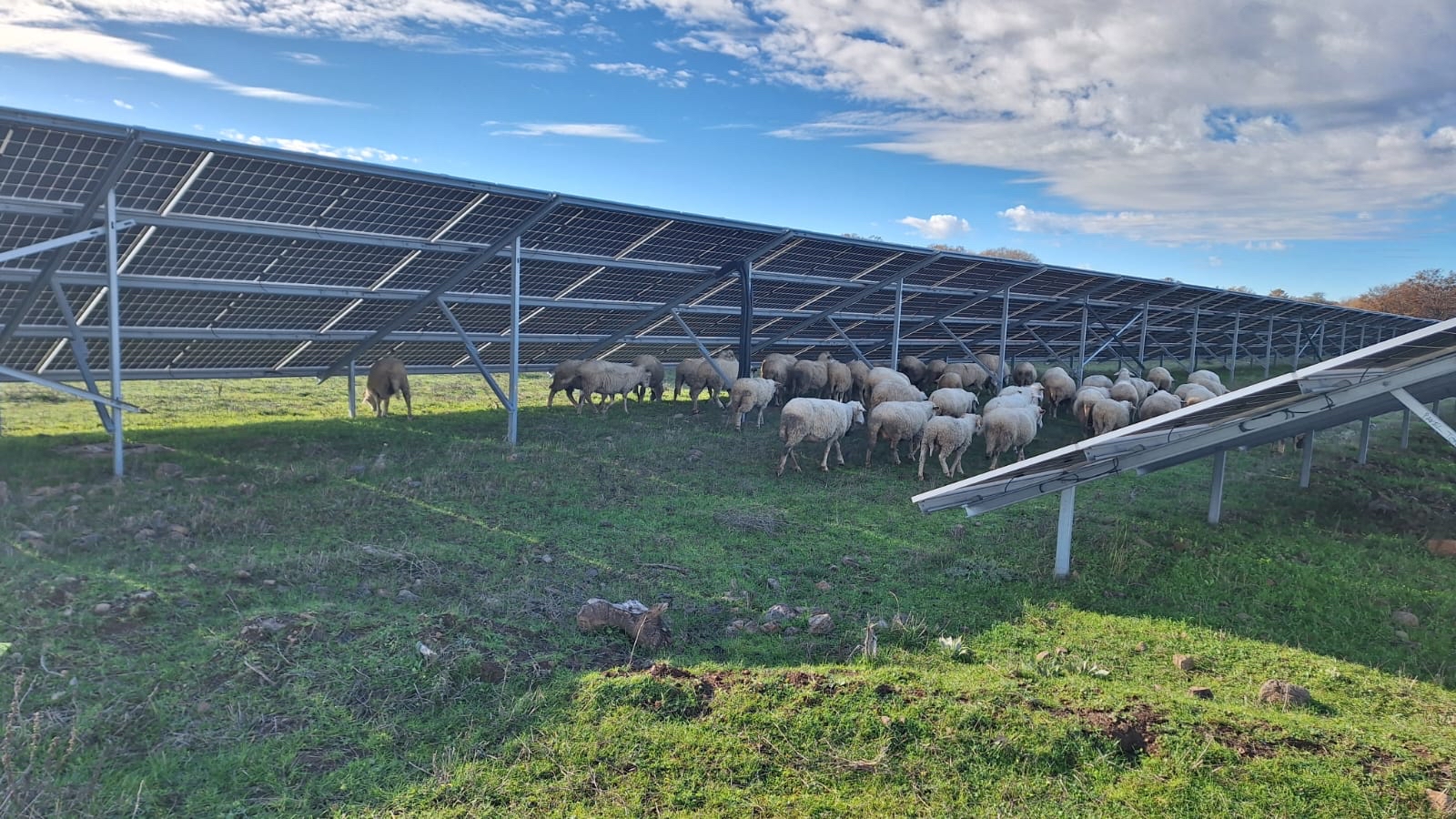
Targeted Biological Vegetation Control: By introducing controlled sheep and lamb herds to perform continuous grazing inside the solar arrays, the asset has recorded zero chemical applications since commissioning, shielding local groundwater basins and topsoil biomes.
Fire Mitigation and Margin Isolation: Mechanical cutting assets are exclusively restricted to non-palatable, thorny weed patches, cutting direct carbon intensity scores. The constant structural grazing lowers localized fire propagation hazards during high-temperature summer intervals by preventing the accumulation of dry biomass, increasing site occupational safety indicators.
Sourcing Rural Asset Expansion: Multiplying Regional Livestock Densities Fivefold
Beyond reinforcing pure environmental indices, the project acts as a direct economic multiplier for rural smallholders located within the energy corridor. The operational coordination with local livestock farmers yielded distinct regional economic milestones over its introductory six-month window:
Radical Feed Cost Elimination: Utilizing the internal fields of the high-security solar facility provided an abundance of organic forage, reducing reliance on expensive commercial industrial feed matrices and creating cash-flow margins that enabled family farms to scale their operations.
Fivefold Stock Population Scale: Backed by improved farm-level economics and a fully secure foraging habitat, the aggregate count of small head livestock registered across the target zone expanded fivefold.
Direct Agricultural Infrastructure Grants: To harden local shearing productivity, the energy venture supplied high-spec motorized wool-shearing hardware directly to regional agricultural unions.
Insulated Predation Barriers: Operating inside a fully fenced facility with continuous security surveillance shields the herds from natural predators, leaving smallholders free to deploy their daily labor toward alternative high-yield farm operations.
Mitigating Electromechanical Risks via Structural Engineering Controls
To ensure livestock protection and occupational compliance parameters remain fully uncompromised within active high-voltage environments, Borusan EnBW Energy deployed rigorous physical engineering controls. Core step-up transformers, heavy inverter units, and high-voltage cable trench networks are fully isolated behind permanent physical structural barriers. To accommodate livestock welfare requirements, technical teams integrated localized clean water distribution points and artificial high-tensile shaded resting canopies throughout the arrays.
By delivering substantial cost mitigations compared to standard third-party commercial land-maintenance contracts, this circular methodology functions as a baseline design template for the entity's future resource planning. Moving forward, Borusan EnBW Energy aims to deploy these standardized natural grazing protocols across its expanding domestic hybrid and utility-scale solar portfolios.