







1. Moisture Management and Hydrophobic Polymers: Second Skin Technology
Traditional cotton can hold up to 25% of its weight in water. During intense performance, this causes the garment to become heavy, cling to the skin, and disrupt body temperature regulation. Modern performance wear instead utilizes synthetic polymers like Polyester (PET) and Polyamide (Nylon 6,6).
-
Wicking Ability (Capillary Effect): The cross-sections of these fibers are engineered into "X" or "Y" shapes rather than standard circles. These micro-channels transport sweat away from the skin via surface tension and move it to the outer layer for rapid evaporation.
-
Silver Ion Integration: To provide antimicrobial properties, Silver Ions (Ag+) are embedded into the fibers during production. These ions disrupt the metabolism of odor-causing bacteria at a molecular level, keeping the athlete fresh.
2. Fluid Dynamics and Biomimicry: The Sharkskin Effect
The marriage of chemistry and biology plays a pivotal role in breaking world records, especially in swimming. High-tech polyurethane-based swimsuits mimic the microscopic "denticles" found on shark skin.
-
Reducing the Drag Coefficient: Ultra-thin fluoropolymer coatings applied to the fabric surface prevent water molecules from "sticking." This hydrophobic layer minimizes drag, allowing the athlete to glide through the water with significantly less energy expenditure.
-
Body Compression: The high-modulus arrangement of elastomeric fibers (Spandex/Elastane) reduces muscle vibration, which helps delay the buildup of lactic acid.
3. NASA’s Thermostat: Phase Change Materials (PCM)
Temperature regulation is a critical technical parameter in both extreme sports and space exploration. Originally developed by NASA to protect astronauts from drastic temperature swings during spacewalks, this technology now stabilizes the body temperature of elite athletes.
-
Microencapsulated Paraffins: Microscopic paraffin capsules are embedded within the fabric fibers. When body temperature rises, the paraffin melts and absorbs the heat (endothermic). As the body cools, it solidifies and releases that stored heat back to the wearer (exothermic).
-
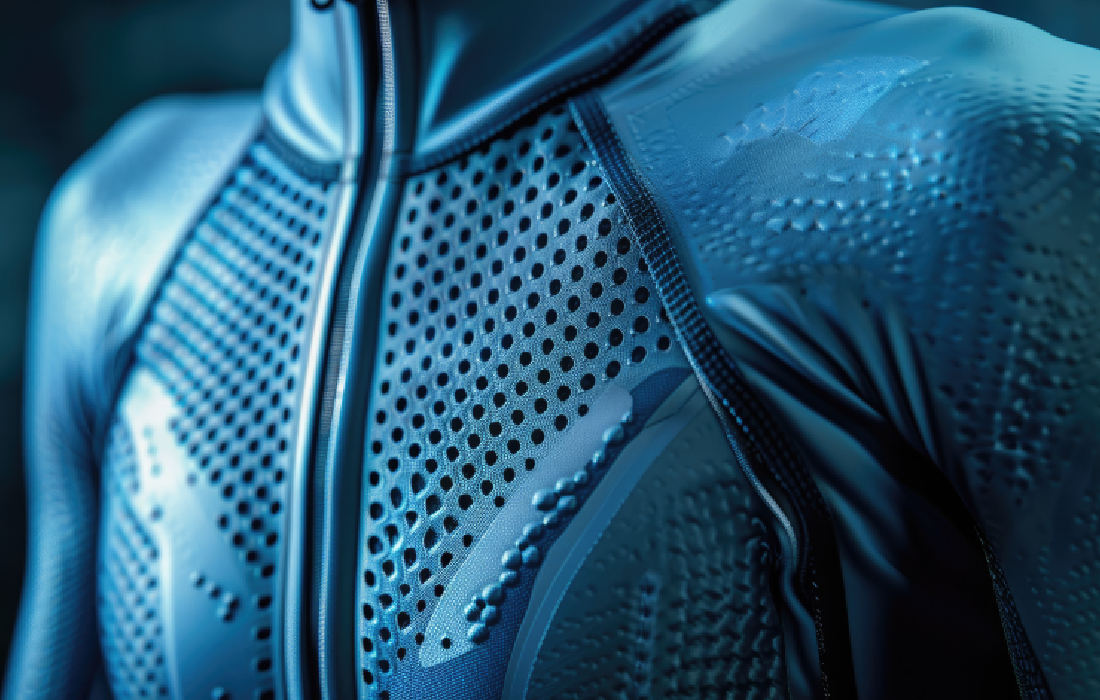
Application: This "invisible thermostat" is used in everything from Apollo missions to professional mountaineering gear and smart athletic jackets.
4. A New Era in Material Science: Graphene and Carbon Nanotubes
Known as the "miracle material" of the chemical world, Graphene is taking the textile industry to the next level. Despite being only one atom thick, it is 200 times stronger than steel.
-
Super Conductivity: Graphene distributes body heat evenly across the entire fabric surface, preventing the formation of "hot spots."
-
UV Protection and Durability: Graphene-infused polymers block up to 99% of harmful UV rays while increasing the fabric's abrasion resistance by thousands of times.
Technical Performance Analysis Table
| Technology | Chemical Component | Core Function | Origin / Primary Use |
| Moisture Management | Modified Polyester / Nylon | Evaporation speed & dryness | Professional Athletics |
| Antimicrobial | Silver Ions (Ag+) | Odor control & hygiene | Medical & Sport Textiles |
| Thermal Regulation | Microencapsulated Paraffin (PCM) | Body temperature stabilization | NASA Space Missions |
| Ultra Durability | Graphene / Carbon Nanotubes | Abrasion resistance & conductivity | High-Tech Tactical Gear |
Editor’s Tip
The next time you shop for sportswear, look beyond the color and check the technology on the label. If you see terms like "Moisture Wicking" or "Outlast/PCM," know that NASA and modern chemistry are working together to boost your performance!