








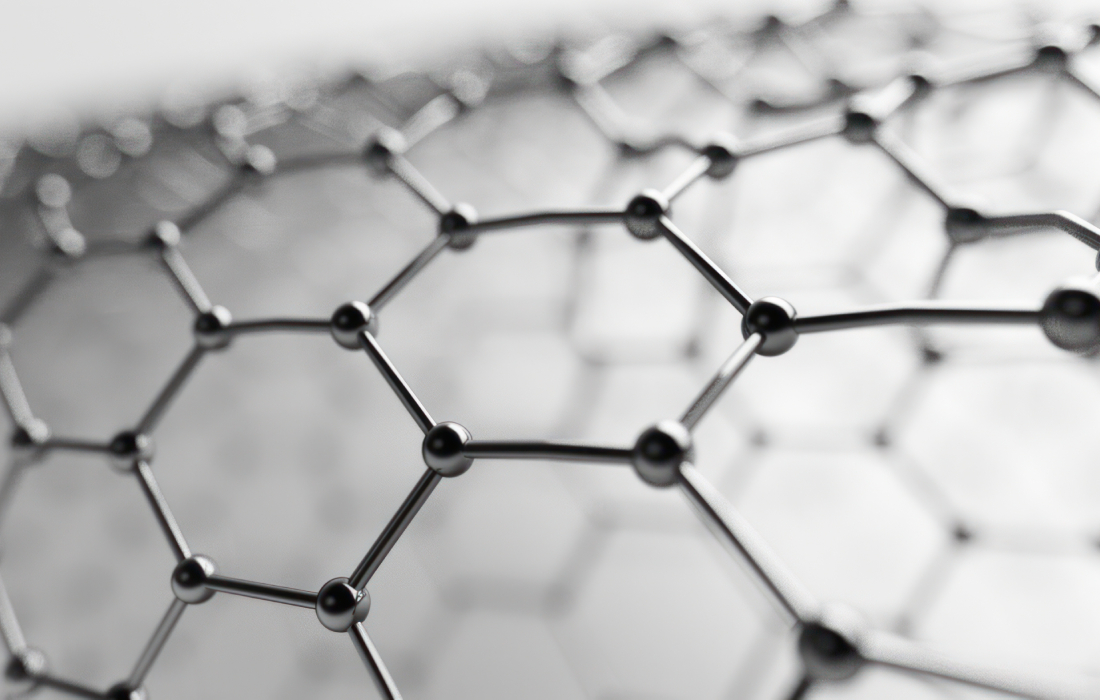
Graphene is hailed by the scientific community as the "wonder material" of the 21st century. Despite being only one atom thick, its properties defy the conventional laws of physics. Discovered in 2004 at the University of Manchester using nothing more than a piece of adhesive tape and a flake of graphite, this material is now poised to revolutionize everything from quantum computing to space exploration.
Entering the 2D World: What Exactly is Graphene?
Graphene is a single layer of carbon atoms arranged in a two-dimensional (2D) honeycomb (hexagonal) lattice. What makes it unique is that it is the thinnest and strongest material ever discovered. This atomic structure is so dense that even helium, the smallest gas atom, cannot pass through its carbon mesh.
Defying the Laws of Physics: Extraordinary Properties
Graphene is considered "miraculous" not because of a single trait, but because it combines several extreme properties within a single substance. Here is its scientific report card:
-
Stronger than Steel, More Flexible than Cotton: Graphene is structurally 200 times stronger than steel. Despite this rigidity, it is incredibly flexible, capable of being stretched by up to 20% of its length. This makes it ideal for both indestructible armor and foldable electronics.
-
The Highway for Electrons: It conducts electricity more efficiently than silver. Electrons move through graphene like massless particles, flowing at speeds approaching the speed of light. This makes it a cornerstone for the next generation of ultra-fast computer processors.
-
Thermal Leadership: It outperforms all known materials in heat conductivity. With a capacity 10 times higher than copper, graphene could permanently solve the overheating issues in modern electronic devices.
Applications That Will Change the World
Graphene is more than just a laboratory experiment; it is a key solution to global energy, medical, and environmental challenges.
Revolutionizing Energy: Graphene Batteries
Set to replace current lithium-ion batteries, graphene-based cells could allow electric vehicles to charge in just minutes. These batteries are lighter, safer, and have a significantly longer lifespan.
Environment and Sustainability
Graphene-based membranes are revolutionary for water desalination. These atomic-scale pores can filter out even the smallest contaminants and salt ions while allowing water molecules to pass through with record efficiency.
Wearable Technology and Medicine
Due to its transparent and flexible nature, graphene is paving the way for biosensors that can be integrated directly onto the skin or internal organs. These sensors can monitor glucose levels or heart rhythms in real-time and transmit data directly to a physician.
Technical Analysis of Graphene
| Parameter | Graphene Value | Comparison to Traditional Materials |
| Tensile Strength | 130 Gigapascals | 200x stronger than steel |
| Electron Mobility | 200,000 $cm^2/Vs$ | 140x faster than silicon |
| Optical Transparency | 97.7% | More transparent than glass |
| Specific Surface Area | 2630 $m^2/g$ | 1 gram can cover 4 tennis courts |
The Future Vision: Why Isn't It Everywhere Yet?
The primary hurdle for graphene is "production at scale." While producing high-quality graphene in a lab is possible, manufacturing tons of defect-free graphene at a low cost remains an engineering challenge. However, as of 2026, we are seeing graphene become an industrial standard in composite materials, ranging from high-end sports equipment (rackets, helmets) to aircraft fuselages.
Graphene is the brightest star of the "Carbon Age," set to succeed silicon, which sparked the digital revolution. As we master this atomic wonder, it will soon transition from the lab into every aspect of our lives, from the phones in our pockets to the water we drink.