


Structured around key operational domains, the 2025 report encompasses Climate, Energy, and Carbon Management; Sustainable Logistics and Intermodal Transport; Occupational Health and Safety; Ethics and Corporate Governance; and Responsible Supply Chain and Social Contribution.
By providing low-carbon freight transport options and international-standard carbon accounting to exporters of all operational scales, Talay Logistics supports cross-border supply chains adapting to changing global trade mandates.
Key Performance Indicators from 2025
Key verified metrics documented in the 2025 report include:
Renewable Energy Integration: 58.3% of total electricity consumption was sourced directly from onsite rooftop solar photovoltaic (PV) systems.
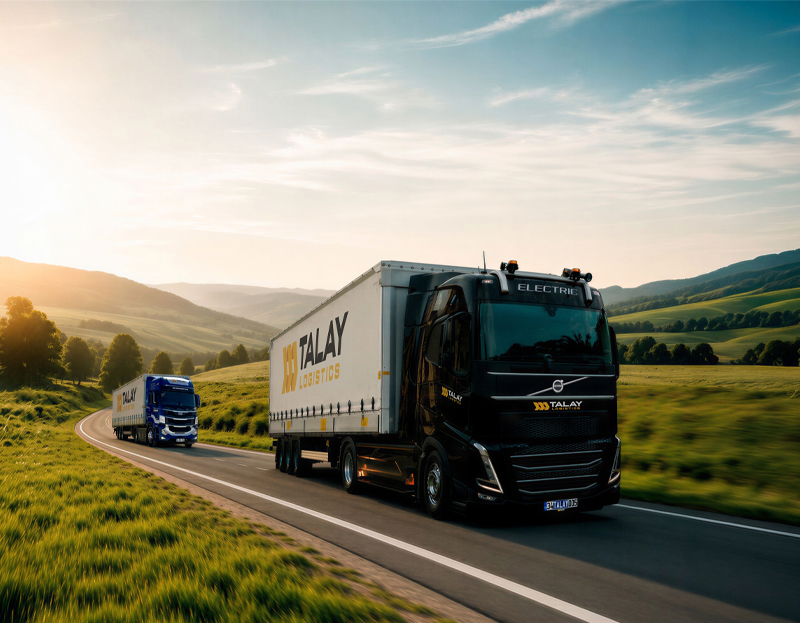
Fleet Electrification: Registered as the first logistics company in Turkey to deploy 100% electric heavy-duty commercial tractors actively within daily operations.
Waste Circularity: 96.3% of all reported operational waste streams were diverted to recycling channels.
Low-Emission Modes: 86% of total freight volume (calculated on a ton-kilometer basis) was transported utilizing maritime and rail transport routes.
Intermodal Growth: Intermodal transport movements expanded by 18.4% year-over-year.
2030 Decarbonization Roadmap: Commits to reducing emission intensity per ton-kilometer by a further 20% through 2030.

Statement from CEO Onur Talay
Onur Talay, CEO of Talay Logistics, stated:
“Logistics is the lifeblood of global commerce, yet it remains one of the sectors where carbon footprints are most visible. We did not adopt sustainability simply because it is on the current agenda or viewed as a trend; sustainability has served as our founding philosophy and our commercial growth model since day one. Every cargo we carry has a future as well as a final destination.
Prioritizing intermodal solutions, transitioning our road fleet to electric vehicles, and generating operational power from solar installations represent both a corporate responsibility and an essential competitive advantage. In 2025, we significantly reduced our emission intensity while maintaining sustained commercial expansion. This demonstrates that sustainability and growth are mutually reinforcing rather than mutually exclusive.
Across global markets, particularly in Europe, international buyers increasingly scrutinize the environmental footprint of freight transportation alongside product quality. Maintaining the export competitiveness of Turkish manufacturers relies directly on decarbonizing each link in the supply chain. We share the operational weight of this transition by offering low-carbon transport modalities and rigorous, international-standard carbon emissions reporting to exporters of all sizes.
Sustainable logistics is attainable only within a safe, equitable working environment. We view employee health and safety, equal opportunity, and professional training with the same gravity as our ecological targets. Road safety and driver development remain our primary field priorities, supported by shared ethical and environmental standards across our carrier and vendor network.
Moving forward, we will scale the digitalization investments we have emphasized over the past three years. Simultaneously, we will concentrate on expanding our battery-electric commercial fleet, scaling renewable energy generation, and growing our intermodal network capacity. We establish our goals through measurable parameters and disclose our progress transparently to stakeholders each year.”