







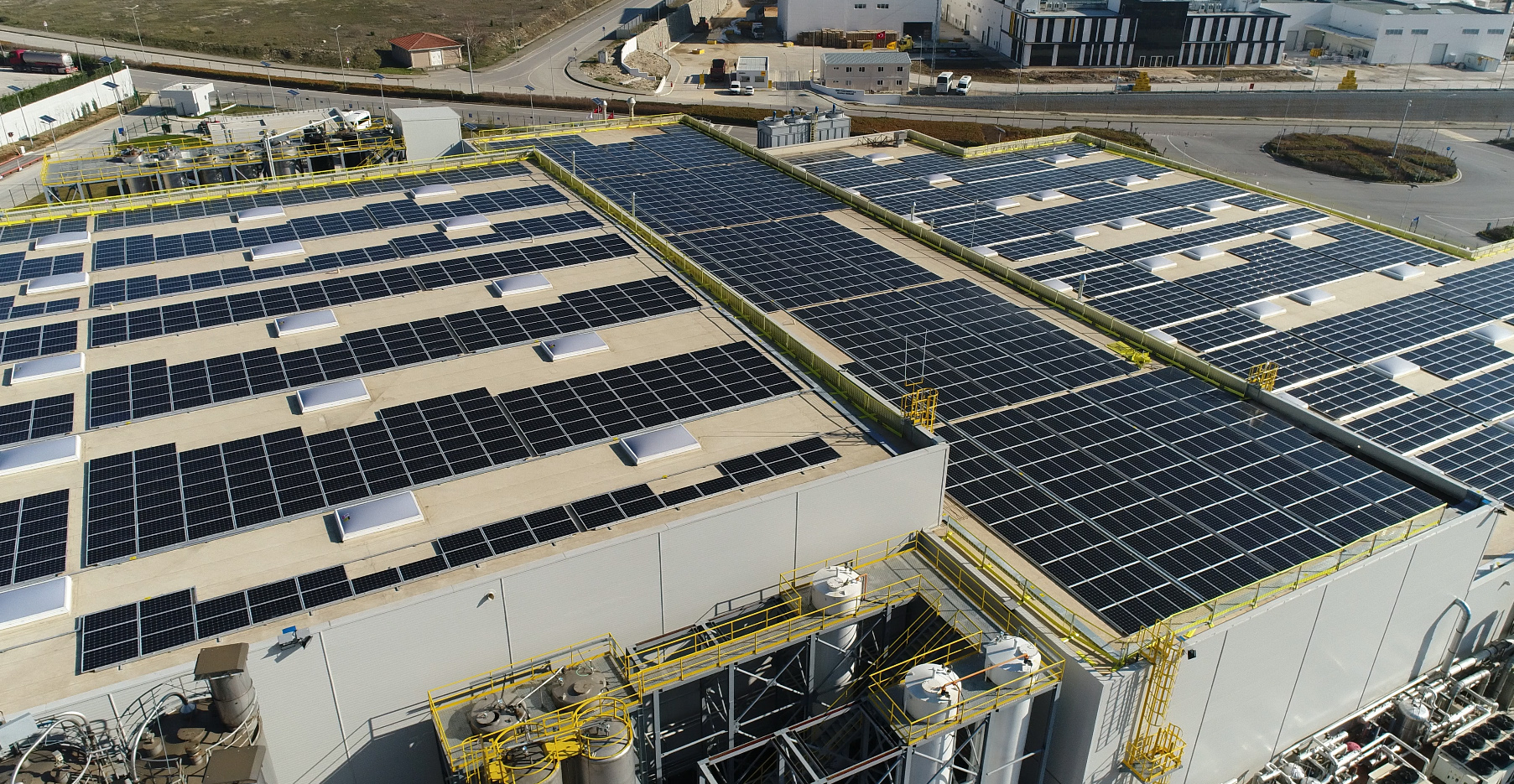
As multinational chemical entities and consumer goods manufacturers accelerate their capital deployments to satisfy rigorous ESG frameworks, Turkey is solidifying its position as a primary corridor for deep industrial decarbonization. Henkel has finalized a comprehensive grid-infrastructure and manufacturing modification project at its GEBKİM Adhesive Technologies Plant in Kocaeli, transitioning the facility into a fully carbon-neutral operational phase. Documented through technical disclosures validated on June 11, 2026, the structural overhaul advances the group's long-term corporate masterplan to achieve absolute "Net-Zero Emissions" status across its global manufacturing network by 2045.
Re-Engineering Scope 1 and Scope 2 Frameworks via Electrification
Aligned with the eco-industrial standards enforced inside the GEBKİM Chemical Specialized Organized Industrial Zone, Henkel's automation and utility teams successfully overhauled the facility's thermodynamic systems across two primary criteria:
Scope 1 (Direct Emissions) & Thermal Electrification: The plant’s legacy natural-gas-fired boiler arrays were decommissioned and extracted from the processing floor. To fill the utility requirements, engineers deployed high-efficiency industrial electric boiler configurations. Eliminating fossil-fuel combustion inside the facility permanently neutralized direct manufacturing emissions, yielding an annual reduction of approximately 956 metric tons of CO2 equivalent.
Scope 2 (Indirect Emissions) & Certified Clean Grid Feeds: The factory's electrical load grid was fully synchronized with localized on-site photovoltaic (PV) arrays, supplemented by audited International Renewable Energy Certificates (I-REC). This combination cleared the site's indirect emissions criteria while advanced energy-management execution software (MES) preserved the plant's aggregate manufacturing volume and production line throughput.
Following this capital intervention, the GEBKİM hub—alongside the Kurkumbh facility in India—now stands as one of Henkel's two largest carbon-neutral industrial assets within the expansive IMEA (India, Middle East, and Africa) geographic business unit.
"Systematically Replacing Fossil Fuels with Regenerative Power Profiles"
Evaluating how localized factory alterations feed into the corporation's transcontinental environmental milestones, Simon Ulmann, Vice President of Operations and Supply Chain for Henkel Adhesive Technologies IMEA, noted:
Securing carbon-neutral production parameters at two of our core anchor facilities within the IMEA zone marks a definitive milestone for Henkel Adhesive Technologies' global sustainability matrix. Our corporate directive is precise: we are systematically extracting fossil-fuel processes from our operational assets, replacing them with high-efficiency electrical workflows powered by renewable energy. The manufacturing efficiency achieved across our GEBKİM and Kurkumbh hubs demonstrates our capability to translate macro corporate strategy into concrete, facility-level data points, effectively short-cutting our journey toward net-zero industrial operations.
Highlighting the regional market importance of the infrastructure turnaround, Mehmet Yılmaz, President of Turkish Henkel Adhesive Technologies and OMEA Operations Director, added: "Following the successful implementation of clean manufacturing at our Tuzla plant, our entire adhesive manufacturing footprint in Turkey has transitioned into carbon-neutral parameters. The systemic shift executed at our GEBKİM site showcases exactly how targeted electrification can modernize historical industrial assets."