







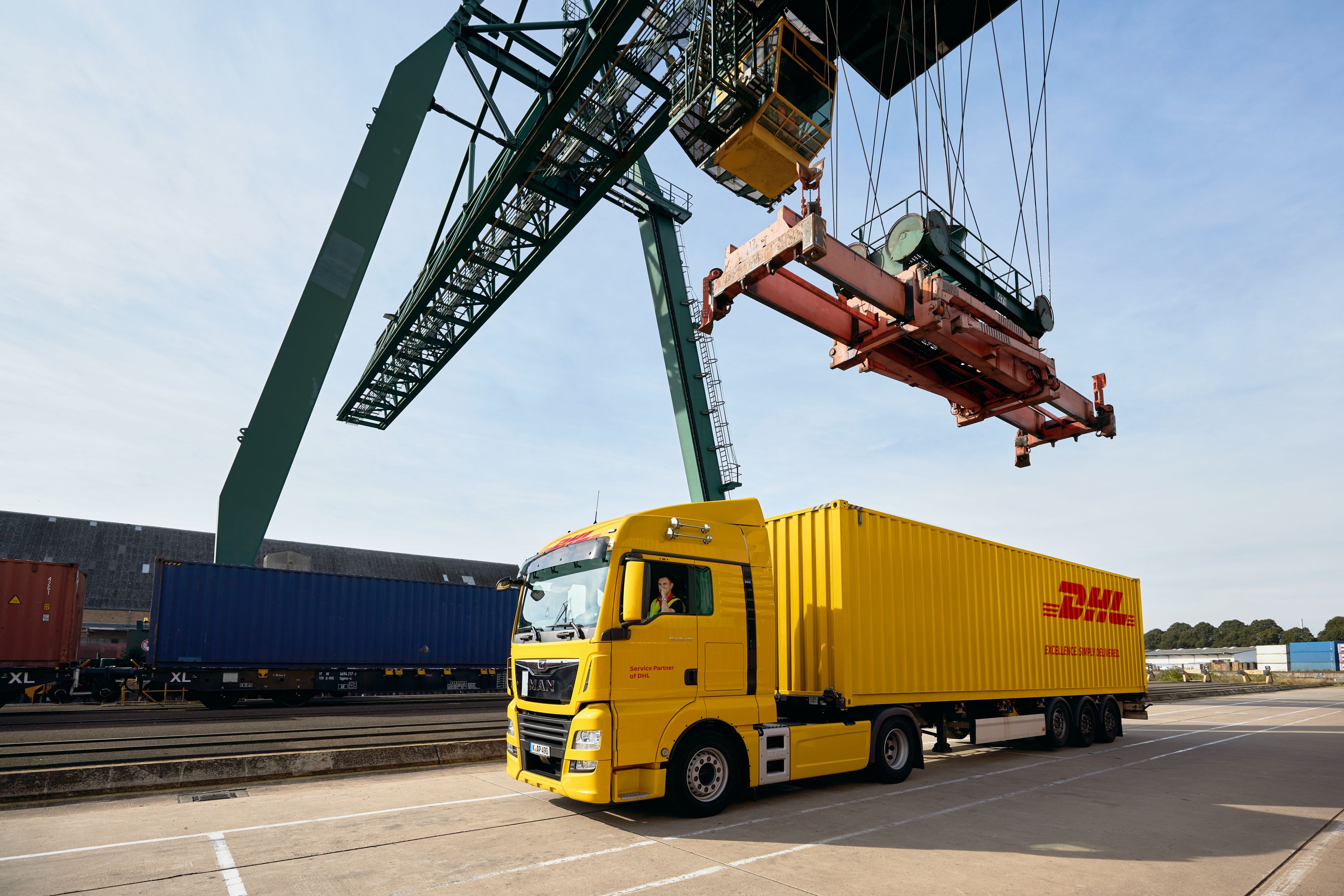
DHL Group, the Official Logistics Partner of Formula 1®, has deployed a strategic multimodal shipping framework designed to decarbonize high-velocity sport operations. Executed under strict racing schedules, the newly unveiled pilot framework demonstrates how conventional industrial infrastructure can be re-engineered to meet demanding commercial timelines while lowering absolute emissions. The performance parameters verified on June 02, 2026, lay down operational baselines for modern, low-emission corporate logistics management moving forward.
Precision Freight Management Across a 2,000-Kilometer Supply Chain
Spanning a transcontinental corridor from Miami, Florida, to Montreal, Canada, the 2,000-kilometer logistics run demanded absolute alignment between railway schedulers and operations teams. The manifest totaled approximately 50 containers, consisting of 46 units of 40-foot "high-cube" and 4 units of 20-foot freight configurations packed with precision automotive components.
By shifting %68 of the total tonnage—which conventionally moves via standard highway trucking—to domestic rail lines, the operation verified a viable pipeline for reducing greenhouse gases. To guarantee material safety and prevent mechanical failure over long distances, each container was retrofitted with active shock sensors and digital tracking instruments to continuously record real-time telemetry throughout the journey.
Joint Climate Action: Aligning 2030 and 2050 Net-Zero Directives
This infrastructure integration expands upon a 20-year corporate partnership between DHL and Formula 1®. The structural shift supports Formula 1®’s institutional mandate to achieve a "Net Zero" footprint by 2030, alongside DHL Group’s binding target of net-zero emissions by 2050.
Paul Fowler, Head of DHL Global Motorsports Logistics, emphasized the strategic viability of the integrated railway model:
Integrating rail into our race-to-race logistics framework demonstrates how established transport modes can be applied in new ways to support sustainability in a highly time-critical environment. The successful delivery of all cargo in this pilot project proves that rail can reliably support the demanding Formula 1 calendar while contributing to emission reductions. This setup paves the way for scaling new approaches to minimize the championship's environmental footprint.
Scaled Multimodal Engineering in High-Performance Sectors
The North American rail corridor pilot functions as a core component of DHL’s diversified sustainable distribution network for global events. Other industrial mitigation frameworks actively used across the international circuit include:
Sustainable Aviation Fuel (SAF): Applied through customized "book-and-claim" transactional models, SAF utilization generates up to an 80% reduction in lifecycle greenhouse gas emissions compared to standard jet turbine fuels.
Biofuel Road Fleet: Operating more than 50 specialized biofuel trucks across European routes, this commercial road network yields an average 83% reduction in carbon emissions compared to conventional diesel alternatives.
Regionalized Route Optimization: Advanced data modeling is used to group racing events geographically, cutting down gross travel mileage and optimizing fuel expenditure across consecutive seasons.
Pending final validation of economic feasibility and schedule constraints from the 2026 analytics batch, both corporations plan to scale rail infrastructure utilization throughout North American corridors starting in 2027.