







Permitting processes, one of the most critical issues for Türkiye’s renewable energy targets, are entering a new phase with the “Super Permit” regulations introduced under Law No. 7554, published in the Official Gazette on 24 July 2025.
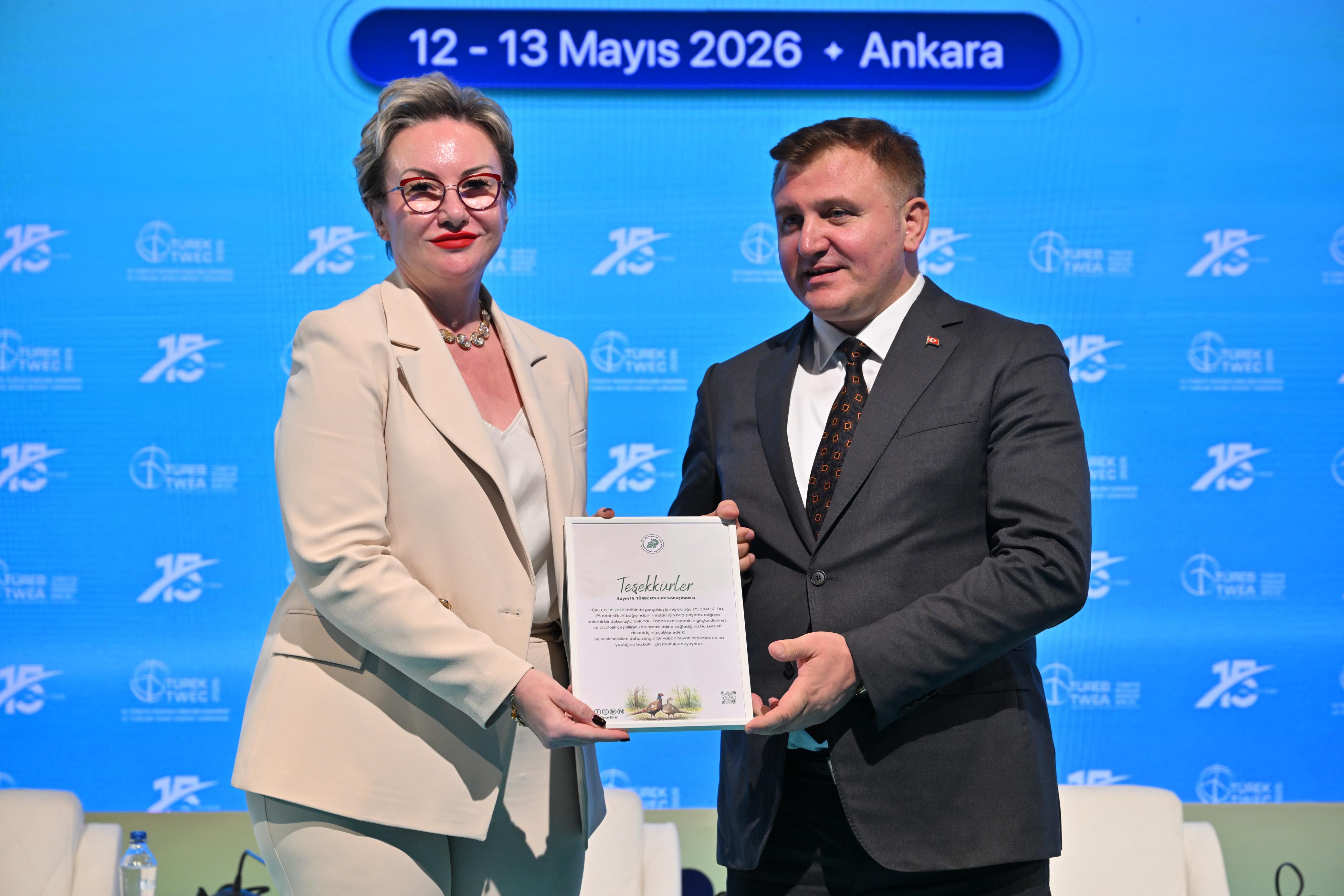
At the session titled “After the Super Permit: The New Permitting Regime in Wind Investments,” held during TÜREK 2026 by the Turkish Wind Energy Association (TÜREB), public institutions and sector representatives evaluated the impact of the new framework on investment processes.
The session focused on parallel permitting processes, stronger coordination among public institutions, existing bottlenecks and secondary legislation expected in the coming period.
Non-Operational Capacity Reaches 64.3 GW
According to the data shared, Türkiye’s total installed capacity that has not yet become operational has reached 64.3 GW.
Of this capacity, 30.6 GW consists of solar power plant projects, while 24 GW comes from wind power projects. Around 19.7 GW of the wind capacity is linked to projects currently at the preliminary license stage.
This outlook makes faster permitting processes a decisive issue for both investors and Türkiye’s energy transition goals.
Storage-Integrated Project Demand Approaches 30,000 MW
One of the most prominent topics discussed during the panel was the strong investment demand for storage-integrated renewable energy projects.
For storage-integrated wind projects, preliminary licensed capacity has exceeded 17,368 MW across 248 projects. For storage-integrated solar projects, the figure has reached 12,726 MW across 354 projects.
Together, these two categories bring the total storage-integrated preliminary license portfolio close to 30,000 MW.
In terms of permitting progress, 126 storage-integrated wind projects have received “Environmental Impact Assessment Positive/Not Required” decisions. 169 projects have submitted expropriation applications, while 61 projects have obtained forest permits.
On the solar side, 227 storage-integrated projects have received “Environmental Impact Assessment Positive/Not Required” decisions, while 310 projects have submitted expropriation applications.

Target: Reducing Permitting Timelines to 24 Months
The strong investment appetite in the sector has made shorter permitting timelines a critical factor for energy investments.
With improvements made since last year, permitting processes can still extend to around 33 months for wind projects and 30 months for solar projects. With the remaining Super Permit regulations, the target is to reduce these timelines to 24 months.
The panel also addressed secondary legislation topics that could directly affect storage-integrated investments. These include setting a single system usage fee constant for both injection and withdrawal, enabling partial acceptance procedures and reviewing tolerance mechanisms.
“Faster Processes Directly Affect Investment Appetite”
TÜREB Vice President Ebru Arıcı emphasized that in renewable energy investments, process management speed has become as decisive as financing and technology.
Arıcı stated that Türkiye has strong investment potential in wind energy, but for projects to move from planning to implementation, permitting processes must be predictable, coordinated and fast.
According to Arıcı, the capacity demand approaching 30,000 MW in storage-integrated investments clearly demonstrates strong investor appetite. She noted that new regulations in areas such as environmental impact assessment, forest permits, pasture permits, expropriation, zoning and construction licenses are expected to significantly accelerate investment processes.
In the new period, competition in the energy sector is expected to be shaped not only by capacity size, but also by how quickly projects can be commissioned.