







Following the enactment of Turkey's national Emissions Trading System (ETS) Regulation, the Turkish cement sector outlined its strategic readiness. TÜRKÇİMENTO stated that the ETS represents more than a regulatory compliance framework, serving as a catalyst for low-carbon investments and long-term industrial competitiveness.
Reinvesting Carbon Revenues into Decarbonization
TÜRKÇİMENTO highlighted that recycling revenues generated through carbon pricing back into industrial transformation remains critical:
Financing Mechanism: Channeling carbon market revenues toward climate change mitigation, R&D, and green technologies transforms carbon costs into a self-sustaining investment fund for industrial decarbonization.
Transition Principles: Moving from the pilot phase to full enforcement requires predictable benchmark criteria, a just transition framework, and targeted investment mechanisms tailored to actual operational conditions.
Sector Readiness Across Kilns Producing 500+ Tons of Clinker Daily
Backed by long-standing emissions monitoring, reporting, and verification practices, the Turkish cement sector will participate in both pilot and mandatory ETS phases with its clinker rotary kilns having a daily capacity of 500 tons or higher.
The industry’s decarbonization roadmap comprises:
Alternative fuels and raw material utilization,
Operational energy efficiency and waste heat recovery (WHR),
Reducing clinker-to-cement ratios,
Long-term deployment of Carbon Capture, Utilization, and Storage (CCUS) technologies.
Offsetting Mechanisms Under EU CBAM and Trade Resilience
Addressing cross-border trade implications, TÜRKÇİMENTO emphasized that offsetting carbon fees paid domestically in Turkey against the EU Carbon Border Adjustment Mechanism (CBAM) is decisive for exporters. Retaining carbon pricing revenues within national borders ensures that financial capital is retained locally to fund domestic industrial upgrades.
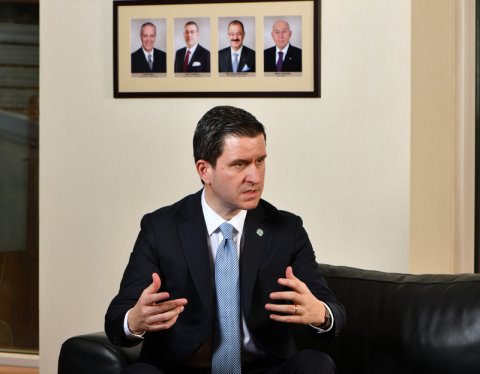
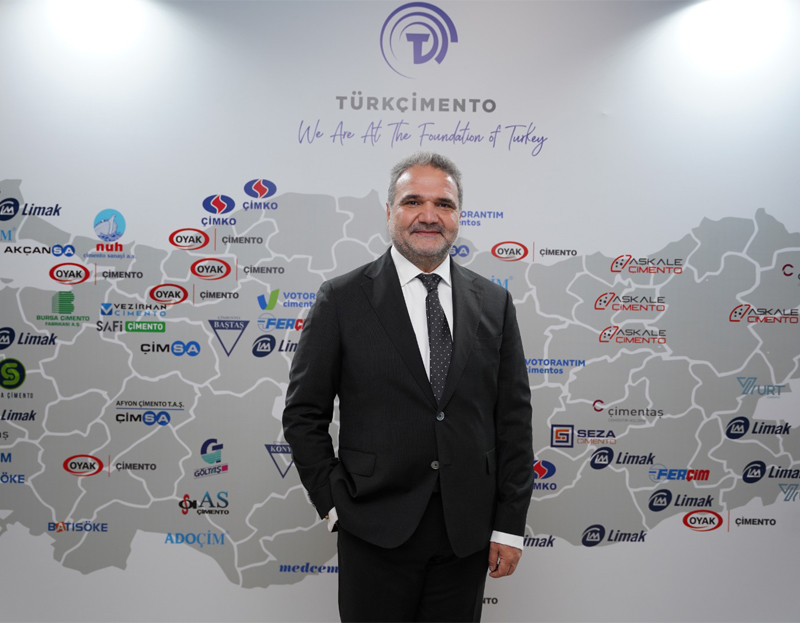
Statement from TÜRKÇİMENTO CEO Volkan Bozay
Volkan Bozay, CEO of TÜRKÇİMENTO, stated:
“As the cement sector, we perceive the Emissions Trading System not as a compliance burden, but as an opportunity to secure an advantage in global competition. Global trade rules and development models are being restructured around low-carbon manufacturing. We must actively position ourselves at the center of this transformation. We believe the ETS will serve as an instrumental driver preparing Turkish industry for this transition.
Industrial transformation necessitates substantial, long-term capital investments. Therefore, channeling revenues generated from the carbon market into climate mitigation, R&D, and green transformation projects is critical. In this manner, carbon pricing ceases to be merely an expense and converts into a sustainable source financing industrial modernization.
Managing carbon costs within Turkey’s own borders and directing these funds toward green transformation will provide our exporting sectors with a significant advantage. Our objective is not solely regulatory adherence, but executing an orderly shift to a low-carbon economy while defending Turkey’s manufacturing strength, export volumes, and industrial competitiveness.”