





Packaging Chemistry in Cosmetics: Differences Between Aluminum Bottles and Pressurized Aerosol Systems
Selecting the appropriate packaging format remains the most critical phase in determining the shelf stability of a facial serum, body spray, or deodorant. Growing consumer demand for reduced plastic consumption and stringent sustainability mandates have steered cosmetic manufacturers toward infinitely recyclable aluminum packaging. Yet the landscape of metal packaging is far from uniform.
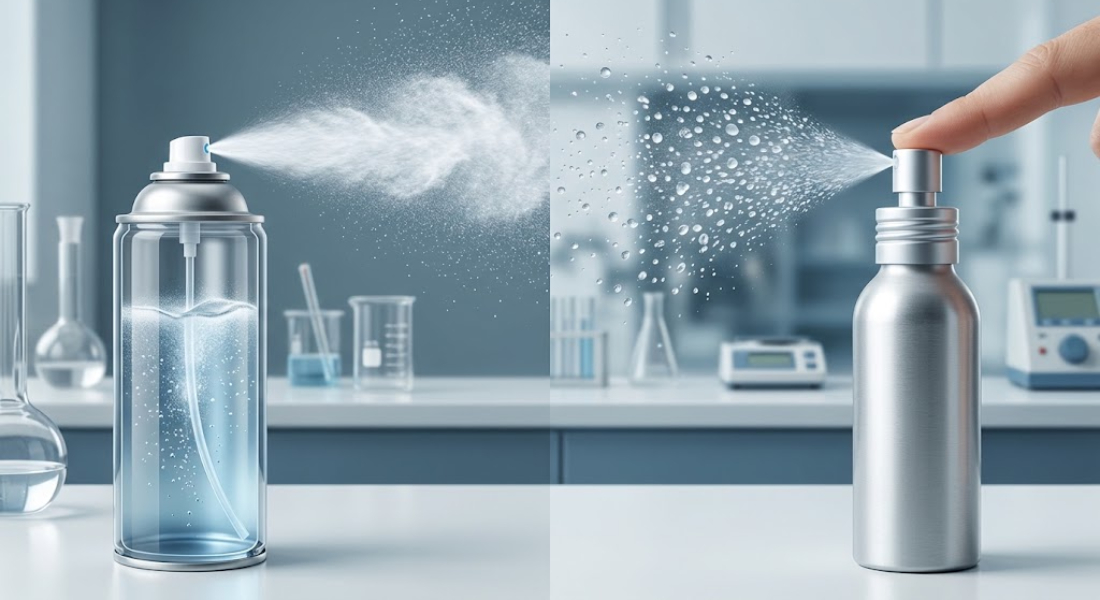
On one side stand atmospheric aluminum bottles powered by mechanical dispensing pumps; on the other are pressurized aerosol cans charged with liquefied gases. While both present a clean, premium metallic aesthetic externally, they conceal entirely distinct material sciences, internal coating chemistries, and industrial handling requirements behind their surfaces.
Pressure Dynamics and Spraying Mechanics
The fundamental distinction between these two packaging categories lies in how the internal bulk formula is driven outward through the actuator.
Propellant Chemistry in Aerosol Cans: Pressurized aerosol containers operate using liquefied propellant gases such as propane, butane, isobutane, or dimethyl ether (DME) mixed directly with the product concentrate. Upon depressing the valve, these compressed gases expand instantly, atomizing the formulation into microscopic droplets suspended in air. The result is the uniform, fast-drying mist required for hairsprays, dry shampoos, and antiperspirants.
Mechanical Pump Displacement in Aluminum Bottles: Conventional aluminum bottles carry zero pressurized propellants. The formulation is drawn upward via atmospheric pressure differentials generated by a mechanical finger pump, trigger sprayer, or lotion dispenser. While this mechanism cannot match the sub-micron droplet sizing of an aerosol, it affords exceptional fluid control for denser liquids such as toners, micellar waters, and body lotions.

Internal Liner Chemistry and Corrosion Resistance
Although aluminum spontaneously develops a protective passivating oxide film upon atmospheric exposure, direct contact with aggressive cosmetic bases can initiate corrosion. Consequently, the interior metal wall demands continuous chemical isolation.
Epoxy and Polyamide Resin Barriers: Both aluminum bottles and aerosol cans receive internal lacquering to eliminate direct interaction between the formula and raw alloy. Highly alcoholic formulations, volatile essential oils, or extreme acidic/alkaline pH ranges can induce pitting corrosion on bare aluminum if the liner is improperly matched.
BPA-NI (Non-Intent) Standards: Current regulatory standards increasingly demand formulations free of Bisphenol A (BPA) cross-linkers. Modern polyester or polyacrylate-based liners preserve cosmetic integrity while maintaining sufficient mechanical elasticity to resist cracking even if the container wall suffers external denting.
Sustainability and Recycling Comparison
When evaluating post-consumer life cycles, the two packaging configurations diverge significantly across recovery streams.
Straightforward Disassembly of Aluminum Bottles: Standard aluminum bottles permit quick manual unthreading of the pump or dispensing cap. The remaining monobloc aluminum body enters standard scrap streams without residual gas hazards or deflagration risks.
Safety Protocols in Aerosol Recovery: Although aerosol cans possess high structural metal value, residual propellants present fire and explosion hazards during industrial shredding and compaction cycles. Furthermore, separating crimped steel or brass mounting cups from the aluminum can body introduces an extra mechanical sorting stage.

Filling Safety, Logistics, and Cost Architecture
Manufacturing conditions directly shape the total unit economics of the finished cosmetic product.
ATEX Compliance: Filling pressurized aerosols necessitates specialized explosion-proof facilities (ATEX certified) featuring advanced air exchange systems and spark-isolated machinery. Downstream warehousing and transport must comply with hazardous material regulations (ADR), elevating logistics overheads.
Conventional Filling Efficiency: Monobloc aluminum bottles process seamlessly on standard liquid filling lines without specialized gas-handling infrastructure. They transit via standard freight networks, presenting minimal regulatory overhead during global distribution.
The decision between aluminum bottles and aerosol cans in cosmetics hinges directly upon the target application and sensory delivery required by the consumer. For antiperspirants and styling sprays requiring instantaneous drying and ultra-fine dispersion, pressurized aerosol systems remain unmatched. Conversely, for brands prioritizing simplified logistics, streamlined recyclability, non-hazardous filling, and viscous formula management, mechanically pumped aluminum bottles deliver an exceptionally balanced, forward-looking packaging solution.