







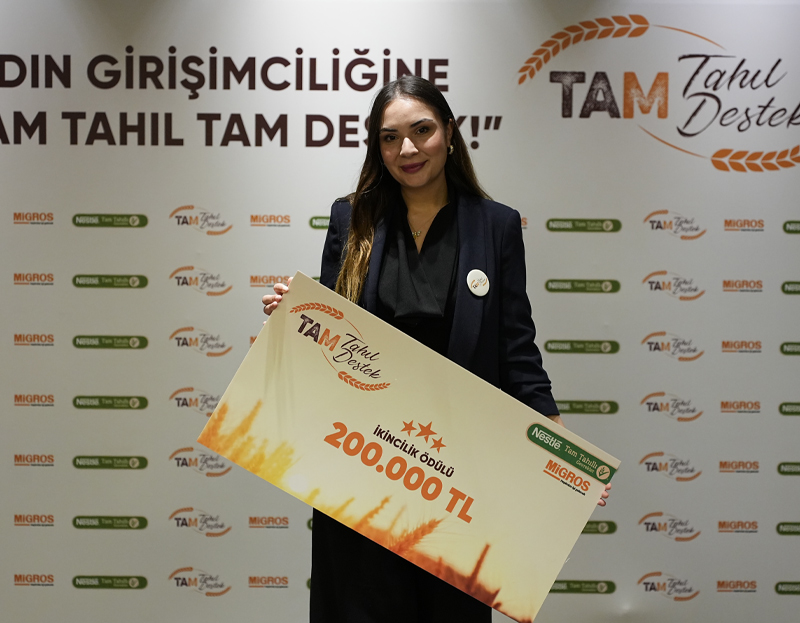
As global petrochemical infrastructure encounters tightening carbon border adjustments, finite fossil-fuel reserve limitations, and stringent single-use polymer bans, processing agricultural side-streams into high-margin biodegradable bioplastics via biorefinery tracks marks a vital development vector for circular economies. Within regional venture capital and innovation hubs, deep-tech and sustainability-focused startups are accelerating their time-to-market parameters by leveraging targeted corporate acceleration models. Established to mitigate agro-waste overheads and construct clean alternatives for packaging industries, material science startup Agripoli has transitioned into full commercial deployment. The initial polymer synthesis work structured by founder Ebru Baripoğlu, originally bootstrapped via a home-kitchen framework and subsequent institutional backing from TÜBİTAK, has scaled into an integrated enterprise model driven by capital grants and technical mentorship from the "Tam Tahıl Tam Destek" (Whole Grain Whole Support) initiative, backed by Nestlé Breakfast Cereals and retail giant Migros. Documented across ecosystem intelligence registers as of June 23, 2026, the programmatic validation showcases a scalable framework to advance zero-waste agricultural value-chain architectures.
Scaling Past Infrastructure Hurdles: Deep-Tech R&D and Third-Party Pipelines
Initiating her development pathway during her university tenure by synthesizing plant-based vegan leathers out of apple and citrus pomace residues, Baripoğlu managed initial organic polymer compounding sequences with limited domestic toolsets. Overcoming the severe prototype manufacturing and testing equipment barriers that commonly stagnate early-stage hardware and biotech startups, Agripoli managed its scaling parameters through clear operational shifts:
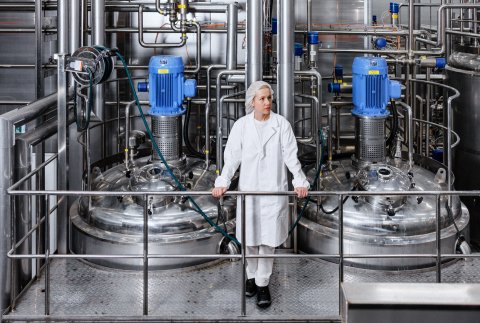
Mitigating Infrastructure Gaps via Industrial Leasing: To bypass high capital expenditure (CapEx) tracking criteria required for industrial-grade polymer characterization and reaction monitoring, Agripoli outsourced its scale-up batches by leasing processing lines and reactor capacity from certified third-party manufacturing facilities.
TÜBİTAK Seed Valuation: The systemic validation of the startup's green chemistry metrics secured non-dilutive seed capitalization from TÜBİTAK, establishing the official corporate governance chassis for the firm.
Go-To-Market Ready Tuning: The injection of fresh capital coming out of the "Tam Tahıl Tam Destek" accelerator directly optimized the group's working capital cycles, bringing the biological packaging compound arrays to absolute market-readiness for mass business-to-business (B2B) supply contracts.
Capital Fusion and Commercial Network Activation: Ideation to Mentorship
Through its alignment with the Nestlé and Migros accelerator framework, Agripoli balanced its balance sheet while embedding its data lines directly into dominant retail and fast-moving consumer goods (FMCG) distribution loops. The functional development architecture maps across specific operational tracks:
Agripoli Biotech Strategic Acceleration Infrastructure
Acceleration Framework Segment | Corporate System Implementation | Tangible Venture Performance Output |
Non-Dilutive Cash Grant | Directed capital allocation via Nestlé Breakfast Cereals and Migros funding pools. | Funding laboratory hardware purchases; optimizing procurement cycles for base biomass inputs. |
Ideation Marathon & Mentorship | Direct optimization workshops hosted alongside veteran FMCG and retail logistics directors. | Transitioning laboratory bench-scale formulations into scalable commercial products; reducing early operational friction. |
Corporate Network Activation | High-level introductions across corporate buyers, supply chain managers, and packaging distributors. | Executing corporate customer validations; building clear B2B client pipelines inside sustainable packaging sectors. |
"Venture Scaling Demands Resilient Alliances; Corporate Grants Amplified Our Footprint"
Evaluating the structural milestones of the startup's journey from a domestic micro-lab to institutional manufacturing channels, Agripoli Founder Ebru Baripoğlu outlined the compounding value of industrial partnerships:
Venture scaling is a demanding and highly volatile pathway. Moving from a home kitchen converted into an engineering lab to owning a functional biotechnology enterprise represents an immense milestone achieved via robust ecosystem alliances. Our primary friction points centered on access limitations regarding specialized research hardware for advanced R&D testing. We solved this constraint by running our heavy infrastructure processing through strategic integrations with third-party manufacturers. The Tam Tahıl Tam Destek program provided value far exceeding standard cash grants; it served as a pipeline for high-tier professional networks and enterprise partnerships. The rigorous management courses allowed us to calibrate our trajectory through a long-term strategic lens, while the intense ideation marathon and mentorship tracks successfully matured our business model to land correct corporate alignments. Targeted acceleration platforms are vital to group diverse value-chain stakeholders and construct predictable long-term supply networks. I extend my sincere gratitude to the engineering and corporate strategy teams at Nestlé Breakfast Cereals and Migros for their continuous support.