







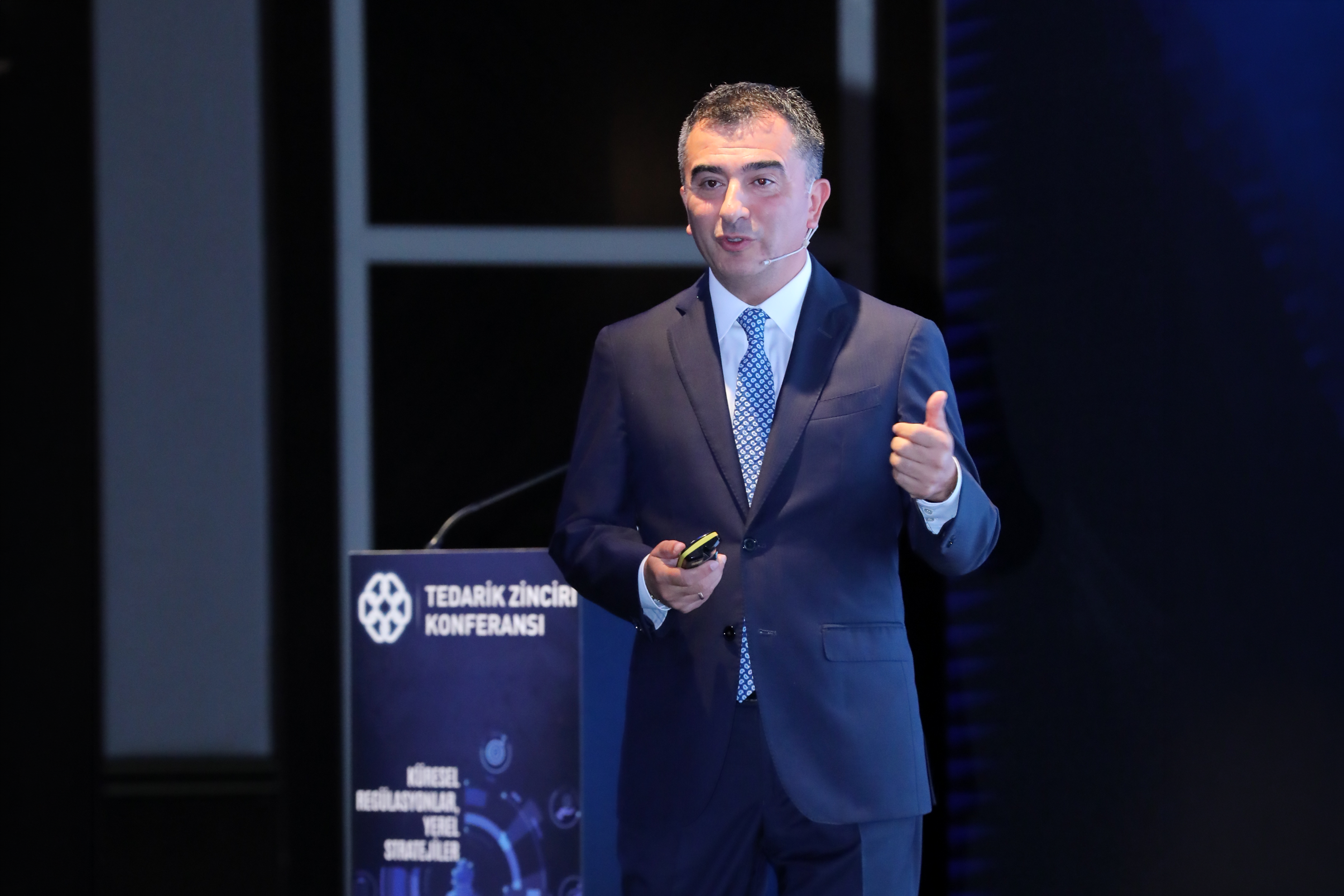
The global trade architecture is experiencing a profound structural realignment driven by macroeconomic friction points, deepening raw material and logistics cost pressures, and rigid net-zero compliance targets. The regional automotive industry, the historical engine of the country's export market is simultaneously facing the European Union’s new protectionist policies, including "Made in EU" sourcing rules, while executing capital-intensive digitalization paths across its supplier networks. To synthesize cross-functional risk management assets into a unified industrial action plan, TAYSAD successfully organized the fifth installment of its signature supply chain summit. Finalized on June 18, 2026, at the Crowne Plaza Istanbul Asia, the conference grouped original equipment manufacturers (OEMs), component suppliers, customs-logistics integrators, and industrial economists under a centralized operational directive.
"Made in EU" and the Protectionist Twist in Industrial Diplomacy
The strategic epicenter of the summit focused on how regulatory initiatives originally launched to fight climate change are systematically converting into hard protectionist entry barriers and geopolitical trade shifts.
Detailing the structural risks within the transcontinental framework, Yakup Birinci, Chairman of the Board at TAYSAD, delivered specific macroeconomic indicators regarding value chain tracking positions:
The international automotive industry is no longer shaped purely by factory-floor production technologies; it is guided directly by aggressive trade policies. The European Union's fresh industrial setups, the 'Made in EU' narrative, and rising global protectionist waves are fundamentally rewriting the laws of competitive trade. A transition that initiated as a collective climate safety drive has evolved into a mechanism affecting international market accessibility. We are manufacturing inside a landscape directly exposed to volatile geopolitical conflicts; from volatile energy margins to petrochemical and raw material supply flows, we must insulate our tracking lines. This is why it is vital for our region to preserve its strategic footprint inside Europe’s premium value chains, accelerate our industrial diplomacy, and move forward under a unified sector-wide common intelligence framework.
85% Export Concentration to Europe: Green Transitions and Financing Needs
Highlighting the sector's intensive market concentration alongside systemic financial liabilities like the Carbon Border Adjustment Mechanism (CBAM), Kemal Yazıcı, Chairman of the Board at the Uludağ Automotive Industry Exporters’ Association (OİB), focused on the leveraging power of state-backed financing:
The central architecture guiding the automotive transition is anchored into carbon emission suppression targets and the regulatory frameworks governing global 2050 carbon neutrality blueprints. As an industry, we dispatch approximately 85% of our aggregate export volume directly into the European consumer zone. Consequently, incoming EU border adjustments, localization criteria, and regional trade tariffs register as critical tactical parameters for our manufacturing baselines. Backing our clean-tech capital allocations via structural state grants, tax adjustments, and specialized green finance vehicles remains one of the single most essential pathways to solidify our long-term export velocities across global logistics networks.
"The Path to Competitive Resilience Rests in Economies of Scale, Not Protectionism"
Declaring that high tariff walls and isolationist trading blocs risk making regional manufacturing infrastructures sluggish and uncompetitive over longer horizons, Cengiz Eroldu, Chairman of the Board at the Automotive Manufacturers Association (OSD), stressed the absolute necessity of guarding the deeply integrated Turkish-European supply matrix:
The ongoing evolution shifting global automotive structures stretches far past clean engine variants to redefine transcontinental commercial policies. While rising isolationist guidelines across global landscapes might temporarily shield specific localized sectors in the short term, they ultimately degrade overall competitive output capabilities. Our regional automotive ecosystem serves as a fundamental, completing node within Europe’s core manufacturing and R&D architecture. Shielding this integrated supply chain model is an absolute strategic priority for both regional and European heavy industrial networks. To sustain our structural cost advantage moving forward, we must accelerate factory-floor efficiency transformations and restructure our automotive ecosystem to better capture macro economies of scale. Guarding our market position against fluctuating global balances cannot be accomplished through isolationist protectionism; it mandates superior industrial infrastructure, optimized asset allocation, and resilient international alliances.
From Tiered Emissions Audits to Autonomous Floor Logistics: Technical Ingestions
The operational breakout tracks of the summit evaluated optimized cost-control methodologies, changing customs compliance regulations, and internal factory-floor digitalization pathways across engineering and material handling lines:
TAYSAD 5th Supply Chain Conference Engineering & Logistics Session Matrix
Executive Analyst & Affiliation | Technical Topic / Panel Focus | Operational & Systems Application Field |
Mustafa Cem Kulu (Toyota) | Cost Management Systems | Mitigating oil price volatility and subsequent cost margins affecting core manufacturing inputs including polymers, aluminum, and copper matrices. |
Bahadır Gülteki (Toyotetsu) | Scope 3 Supplier Audit Frameworks | Standardizing tracing and validation tools to monitor indirect greenhouse gas emissions (Scope 3) across downstream tier-2 and tier-3 component facilities under ESG protocols. |
Dr. Faruk Şen (Ünsped Customs Brokerage) | Regional Positioning Amid Expanding EU FTA Networks | Navigating shifting Free Trade Agreement (FTA) grids under complex customs logistics setups and asymmetric tariff risks. |
Buğra Bingöl (Beyçelik Gestamp) | Autonomous Intralogistics: AGV Deployment | Integrating Automated Guided Vehicles (AGVs) directly into core press and welding lines to optimize material transport velocity within smart-factory environments. |
Initiated by executive remarks from TAYSAD Board Members Tülay Hacıoğlu Şengül and Reha Gür, and reinforced by macro projections from industrial economist Bader Arslan, the summit finalized with a high-engagement closing session featuring TAYSAD Accounting Member Bülent Yazıcı and legendary sports manager Yılmaz Vural, who analyzed institutional motivation and team dynamics. Supported by primary sponsor Ünsped Customs Brokerage, the corporate milestone effectively establishes a robust knowledge bank to maximize regional supply chain resilience against upcoming transcontinental trade bottlenecks.