







When discussing healthy cooking, fresh produce, quality oils, and proper culinary techniques usually come to mind first. Yet the chemical structure and integrity of the surfaces our food touches directly dictate the safety of the meal that ends up on our plates. Cutting boards—an essential staple of any functional kitchen—remain the most debated link in that chain.
For decades, conventional wisdom held that plastic boards were superior because they could withstand the high heat of industrial dishwashers. Wood was often pushed out of commercial kitchens under the assumption that its porous structure harbored harmful germs. However, recent surface science and microbial research have challenged this assumption, highlighting two primary threats: stubborn bacterial colonies nesting in knife grooves and microplastic shedding directly into our food.
The Hidden Danger in Knife Scratches: Bacterial Colonization
When a cutting board leaves the factory, its surface is smooth and easy to sanitize. Every stroke of a sharp chef's knife, however, slices microscopic trenches into the material.
Deformation Vulnerability in Plastics: Plastic boards fabricated from polyethylene (PE) or polypropylene (PP) yield under the pressure of a sharp blade, creating jagged, microscopic burrs and deep grooves. Even in a high-temperature dishwasher cycle, soapy water often fails to reach the base of these narrow crevices with sufficient pressure. Organic residues from raw meat or poultry juices get trapped inside, forming stubborn biofilms that significantly heighten cross-contamination risks.
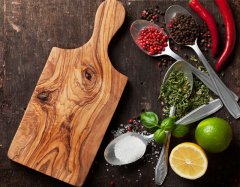
Wood's Natural Antimicrobial Defenses: Sourced from living organic tissue, hardwoods possess inherent cellular defense mechanisms. When a knife edge cuts into wood fibers, the natural elasticity of the grain allows it to partially close back up around the cut. Furthermore, dense hardwoods like maple, walnut, or beech draw moisture away from the surface through capillary action. Deprived of water, bacteria struggle to maintain cell integrity, while natural tannins and antimicrobial compounds within the wood work to neutralize remaining pathogens.
The Microplastic Dilemma: Invisible Polymers on Our Plates
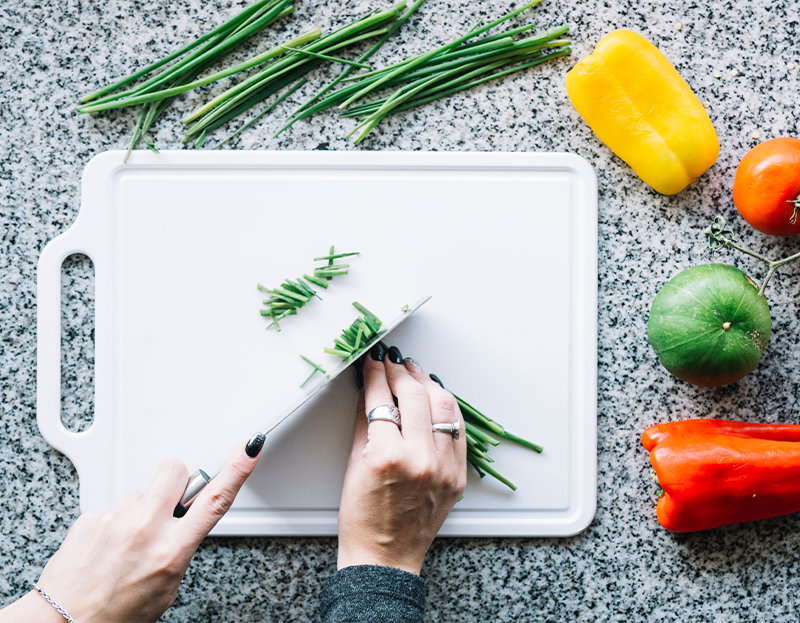
In recent years, the cutting board debate has shifted toward an urgent environmental and wellness concern: microplastics. The continuous sawing motion of a sharp knife across a plastic board mechanically shaves off micro-scale polymer fibers.
Laboratory analyses show that prepping meals on plastic cutting boards can transfer tens of thousands of microplastic and nanoplastic particles into our food each year. Once ingested, these synthetic polymers carry the potential to cross intestinal barriers. While the long-term biological consequences continue to be investigated, minimizing daily plastic exposure remains a compelling reason for health-conscious cooks to return to natural wood.
Comparison: Which Material Suits Which Kitchen Need?
Selecting the right cutting board comes down to finding a practical balance between hygiene, convenience, and safety.
Food Safety and Material Purity: From the perspective of direct food contact and ingestion risks, dense hardwood boards offer a considerably safer profile, releasing zero synthetic polymers or chemical additives into ingredients.
Maintenance and Ease of Cleaning: Plastic boards can be scrubbed with abrasive pads and sanitized in dishwashers, making them convenient for high-volume commercial kitchens using color-coded systems for raw poultry and meats. Hardwood boards require gentler care: they must never be placed in a dishwasher, requiring a quick hand wash with warm soapy water, thorough vertical drying, and occasional conditioning with food-grade mineral oil.
Blade Preservation and Cutting Feel: End-grain and edge-grain hardwood surfaces are gentle on sharp edges, extending knife sharpness and providing a tactile, responsive cutting experience. Plastic surfaces cause faster blunting due to the friction generated against synthetic polymers.
In Summary
While plastic cutting boards seem practical and budget-friendly at first glance, the deep grooves they develop over time harbor bacteria and shed microplastics into your meals. The soundest culinary strategy is to reserve durable, easily replaced composite or dedicated prep boards for high-risk raw meats, while investing in a well-seasoned solid hardwood board (such as maple, walnut, or beech) for vegetables, bread, cheeses, and daily slicing tasks.