







Whether you buy a brand-new car or want to restore the showroom shine of your current vehicle, the first recommendation you encounter is usually ceramic coating. Videos on social media showing lighters tapping on car surfaces, stones bouncing off, or keys attempting to scratch panels create the impression that this application is an unbreakable armor.
Yet in the world of paint protection, the rules of material chemistry and surface tension prevail over miracles. While these nano-technological coatings applied in liquid form and cured into a hardened state add unmatched gloss and chemical resistance to the vehicle, expectations must remain grounded in reality. So, what exactly is ceramic coating, and what damages can it genuinely protect your vehicle from?
The Chemistry of Ceramic Coating: How Liquid Glass Bonds to the Surface
Traditional carnauba waxes or polymer sealants sit on top of the car paint as temporary layers and lose their effectiveness after a few washes. The defining difference of ceramic coating is its ability to form a permanent covalent bond with the clear coat, the outermost layer of the paintwork.
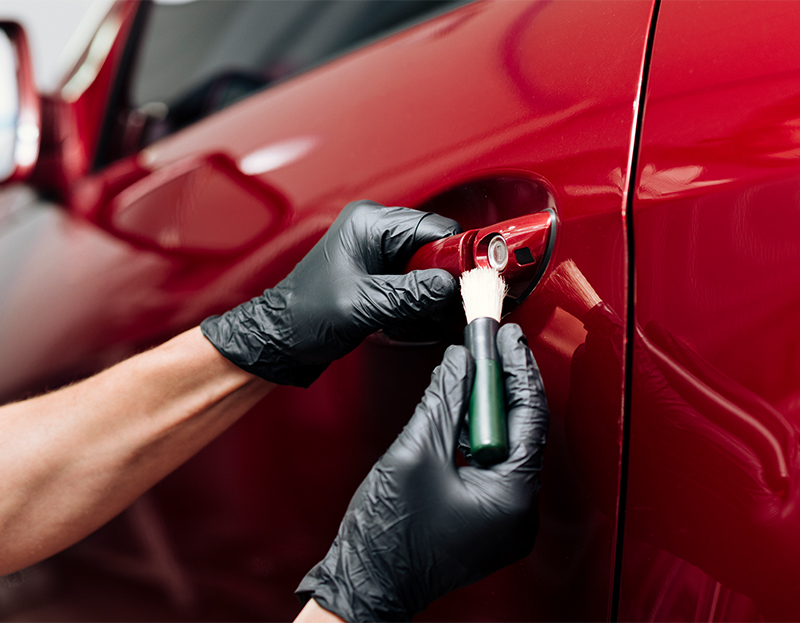
The Power of Silicon Dioxide (SiO2): The primary active ingredient in ceramic coatings is typically silicon dioxide or silicon carbide nanoparticles. Applied as a liquid, this compound reacts with ambient moisture to crystallize and settle into the microscopic pores of the clear coat. As a result, a nano-thin, transparent, and hard glass layer forms across the vehicle.
Hydrophobic Surface Tension: The most mesmerizing aspect of this coating for any driver is its water-repellent (hydrophobic) structure, which dramatically increases the contact angle. Water droplets cannot cling to the surface; they take a spherical shape and roll off with gravity. Consequently, mud, dust, and grime fail to bond with the paint, keeping the vehicle clean for much longer.
Myths and Realities: What Does Ceramic Coating Prevent, and What Does It Not?
Setting aside exaggerated marketing claims, one must clarify the laboratory-proven limits of ceramic coating.
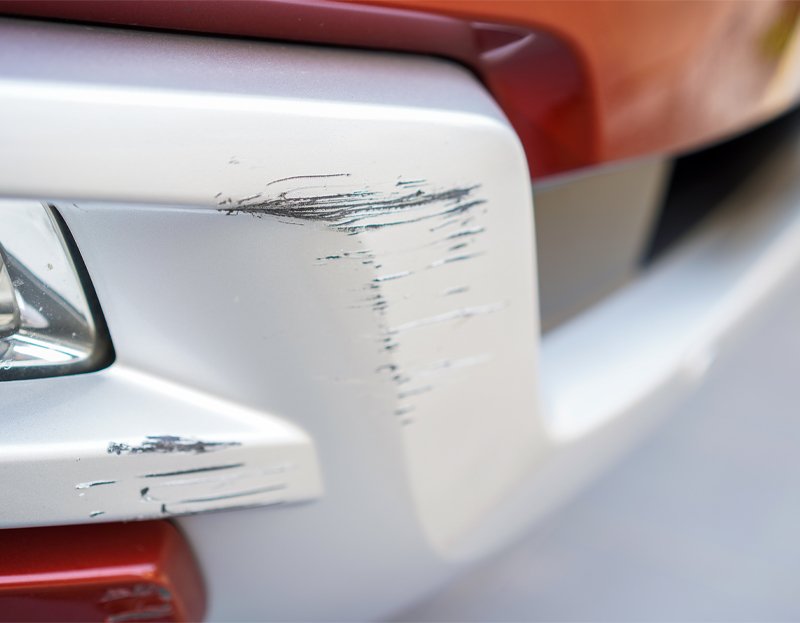
Large Scratches and Stone Chips: Ceramic coating cannot protect your vehicle from a sharp gravel stone flying off the car ahead on the highway or from a deliberate deep key scratch. These coatings measure merely a few microns in thickness; they lack the mass or mechanical elasticity required to absorb high impacts. For physical impact protection, the only real solution remains polyurethane-based paint protection films (PPF).
Fine Swirl Marks and Improper Washing Damage: Because ceramic coating provides a hardened shell, it shields the clear coat against micro-scratches caused by windblown dust friction and careful hand washes. However, washing a vehicle with harsh spinning brushes at gas stations or dirty wash mitts will still introduce swirl marks over time, even with a ceramic layer present.
Bird Droppings and Acid Rain: Uric acid in bird droppings and tree sap etch into clear coats under hot sunlight, leaving permanent scars. Chemical warfare of this kind is precisely where ceramic coating excels. Its high chemical resistance delays acid penetration into the clear coat, buying valuable time for safe removal.
Sunlight and Paint Oxidation: Vehicles fading, dulling, or suffering from clear coat breakdown over time owe this degradation to ultraviolet (UV) rays. Ceramic coating acts as a UV barrier, maintaining the color depth and optical clarity of the paintwork for years.
What Does the "9H Hardness" Claim Actually Mean?
The "9H" mark frequently displayed on ceramic coating packaging is often confused by consumers with the diamond scale (Mohs scale).
In reality, the "H" here refers to the pencil hardness scale (Pencil Hardness Test) used in technical drawing and industrial coatings. A 9H rating simply denotes that the coating resists scratches from the hardest grade drawing pencil, not that it is indestructible like diamond. While automotive clear coats typically sit around 3H to 4H hardness, ceramic coating elevates that resistance to a 9H pencil grade, substantially toughening the surface against light friction.
How to Extend the Lifespan of Ceramic Coating
One must not fall into the trap of assuming the vehicle will permanently clean itself after application. Preserving the longevity and hydrophobic performance of the coating requires proper care habits.
Using pH-Neutral Shampoos: Aggressive wash foams containing heavy acids or strong caustic agents weaken ceramic molecular bonds. Washing should always be carried out using pH-neutral shampoos.
Avoiding Contact Wash Errors: The vehicle must never pass through automated friction brushes; instead, a two-bucket wash technique paired with high-quality microfiber wash mitts should be adopted.
Periodic Surface Rejuvenation: Applying spray sealants enriched with silica (SiO2) once or twice a year replenishes the worn sacrificial hydrophobic layer, keeping water beading performance sharp.
In Summary
Ceramic coating will not turn your car into a bulletproof tank; nonetheless, it stands as one of the most advanced surface treatment technologies available to protect automotive paint against chemical contaminants, sun fade, and fine abrasion. If you expect deep mirror reflections, effortless washing routines, and long-lasting clear coat protection, ceramic coating is a worthwhile investment. If you seek absolute defense against mechanical scratches and stone chips, combining this coating with paint protection film (PPF) on vulnerable areas like the hood and bumper provides the most balanced safeguard.