







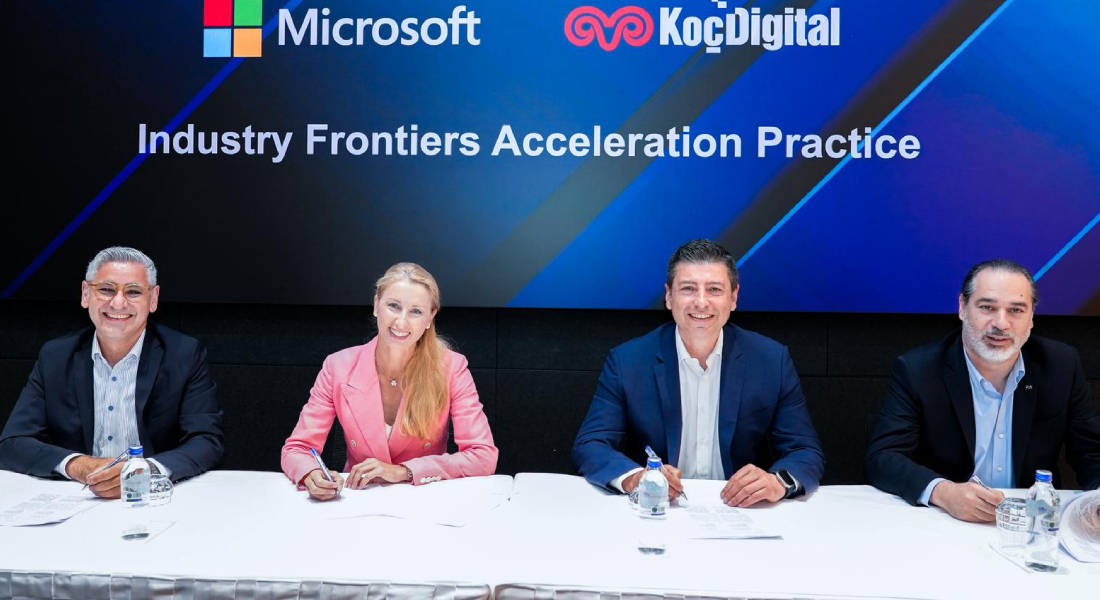
KoçDigital, a prominent advanced analytics and Internet of Things (IoT) technology company in Turkey, has finalized a comprehensive strategic collaboration with Microsoft Turkey to deploy high-performance industrial artificial intelligence solutions. The official signing ceremony, hosted at Microsoft Turkey's headquarters, brought together Mehmet Ali Akarca, Vice Chairman of KoçDigital; Evren Dereci, CEO of KoçDigital; Kristina Tikhonova, Microsoft Southeast Europe General Manager; and Levent Özbilgin, Microsoft Turkey General Manager. Announced on June 03, 2026, the enterprise alliance aims to trigger a 360-degree cultural and technological transformation across diverse verticals, from manufacturing grids to heavy supply chains.
Expanding Enterprise Boundaries: Implementing Agentic, Industrial, and Physical AI
The architecture of the partnership fuses KoçDigital’s deep operational domain expertise in Industry 4.0, predictive asset management, and logistics tracking with Microsoft’s global Azure infrastructure and generative computing modules. Moving decisively beyond standard large language models used for basic office automation, the collaboration introduces structural frameworks across three cutting-edge AI sub-sectors:
Agentic AI (Autonomous Systems): AI configurations capable of independent decision-making, running end-to-end corporate workflows, and optimizing departmental handoffs otonomously.
Industrial AI (Process Analytics): Algorithmic systems engineered to lower scrap margins on production lines, maximize yield, and run predictive maintenance to eliminate unplanned downtime.
Physical AI (Hardware Synchronization): Integrating cognitive computing layers with edge devices, IoT sensors, and robotic systems to streamline heavy, hands-on field operations flawlessly.
Synthesized using Microsoft Copilot, Azure AI, and associated enterprise software, these customized deployments are built to insulate companies from systemic operational errors while boosting velocity and environmental sustainability ratings.
Accelerating the Ecosystem via Rapid Prototyping and Technical Hackathons
The memorandum goes beyond standard commercial provisioning, laying out a rigid co-engineering roadmap. Both entities will actively collaborate on defining proprietary corporate use cases, steering rapid prototyping iterations, running localized pilot operations, and organizing joint data science hackathons and technical support training frameworks to build internal digital capabilities for enterprises.
Highlighting the structural leverage this partnership delivers to the region's industrial core, Mehmet Ali Akarca, Vice Chairman of the Board at KoçDigital, stated during the ceremony:
When Turkey’s robust industrial infrastructure is synchronized with artificial intelligence, it creates a definitive competitive advantage. This collaboration is not only accelerated digital transformation for individual enterprises but a vital milestone for the evolution of the broader industrial AI ecosystem in Turkey.
KoçDigital CEO Evren Dereci reinforced this sentiment, noting that AI is no longer a simple technology budget line but a core operational methodology: "Our target is to help Turkish enterprises convert raw AI capabilities into scalable corporate value that outputs concrete business metrics."
Driving a 360-Degree Cultural and Operational Evolution
Characterizing Turkey as a highly dynamic and strategic investment market within Southeast Europe’s digital expansion plans, Kristina Tikhonova, Microsoft Southeast Europe General Manager, stated that combining Microsoft's cloud ecosystem with KoçDigital's vertical application competencies will systematically scale local capabilities.
Stressing the macro growth opportunities born from deep algorithmic integration, Levent Özbilgin, Microsoft Turkey General Manager, concluded:
The transformative power of artificial intelligence is forging entirely new expansion zones and competitive boundaries for enterprises. Through this partnership with KoçDigital, we are empowering organizations across various sectors to embed AI directly into their core processes, allowing them to engineer more efficient, sustainable, and innovative operational models. Thanks to this AI-driven, 360-degree cultural evolution, we are observing significantly more concrete and scalable outcomes across enterprise projects.