







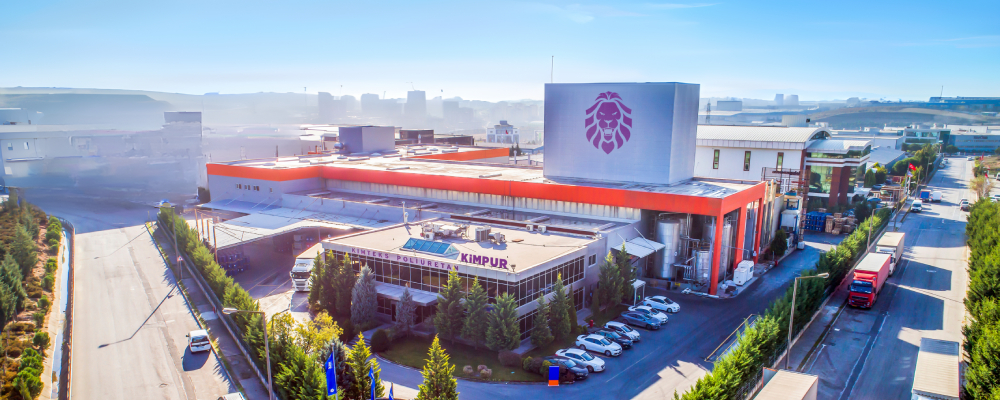
Kimpur, a global player in polyurethane systems, has successfully introduced the System 1 verification process, which redefines fire safety standards in the sandwich panel sector, to the Turkish market. By bringing the advanced inspection and testing approach it already maintains with European sandwich panel manufacturers to the local market, the company has certified its FM-approved and B-s1,d0 fire-rated system as a high-performance solution for its clients in Türkiye.
High-Level Traceability and Verification via System 1
The System 1 assessment approach, actively applied in numerous European projects, involves the independent third-party supervision of the entire testing process, from sample selection to production monitoring. This process, which is becoming increasingly common in Türkiye, brings traceability standards that elevate safety to the highest level in the construction industry.
B-s1,d0 Success Without Additional Components
In collaboration with its customer Davut Panel, Kimpur achieved a remarkable performance with the KIMrigid PIR 205 system:
Scope: System 1 verification was achieved for facade panels ranging from 40 mm to 200 mm in thickness.
Fire Performance: The B-s1,d0 rating was obtained without the use of any auxiliary fire-retardant components.
Sectoral Impact: The fact that the product delivers this performance under real production conditions without extra costs or parts sets a new standard for application efficiency.
Global Expertise Meets Local Manufacturing
Kimpur continues to offer its global System 1 experience to local manufacturers, backed by a strong R&D infrastructure and expertise in polyurethane technologies. The company remains committed to developing high-performance systems that meet international standards and adapt rapidly to changing industrial needs.