






Modern civil engineering and historical monument preservation increasingly look to advanced polymer science and aerospace-grade structural adhesives to execute intricate architectural designs under rigorous environmental safety protocols. Designed by visionary architect Antoni Gaudí in 1882, the construction of the Sagrada Familia Basilica has navigated its most complex structural phase by integrating next-generation material science into its assembly methods. According to engineering blueprints declassified as of June 23, 2026, the successful alignment of the basilica's six central towers was achieved through a 10-year development partnership with Henkel Adhesive Technologies. By utilizing specialized Loctite formulations, developers successfully drove the monument to surpass Germany’s Ulm Minster, crowning the basilica as the tallest religious structure worldwide while establishing comprehensive defensive barriers against marine corrosion, humidity degradation, and urban acoustic resonance.
Material Synthesis: The Modular Prefabrication Subsystem
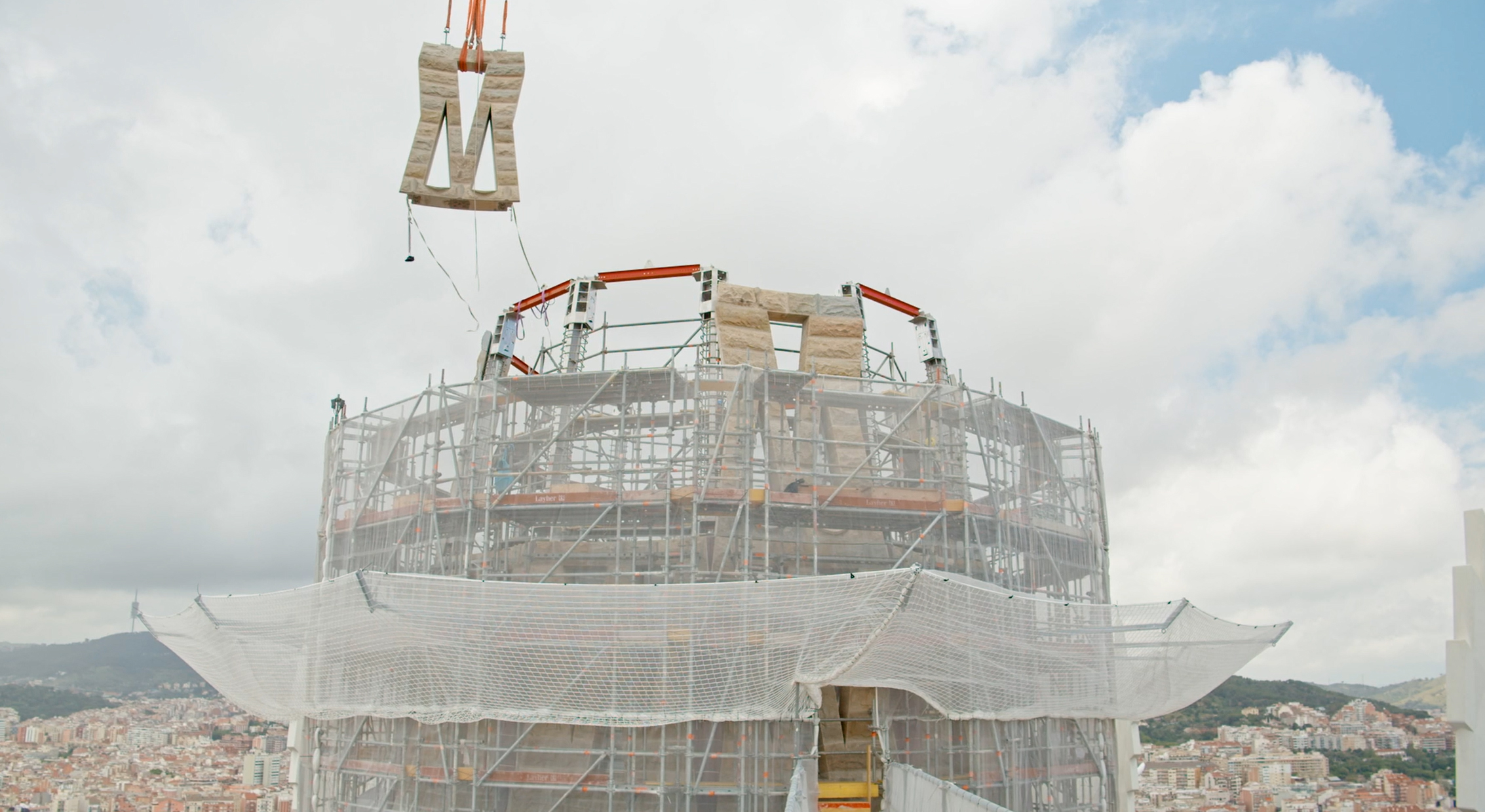
To materialize Gaudí’s multi-layered geometrical plans—which heavily bypassed the physical limitations of late 19th-century construction gear—the modern preservation board swapped out traditional onsite masonry for high-precision offsite prefabrication, accelerating deployment timelines by up to 10 times. The engineering mechanics governing the stone-to-steel bond interface followed strict parameters:
Fluid Cross-Linking Mechanics: Creating a homogeneous structural unit out of incompatible materials (dense granite stone and high-tensile structural steel) required an advanced fluid polymer interface. The liquid structural adhesive was pressure-injected into internal cavity tracks, adapting smoothly to surface microscopic variances to eliminate structural shear slippage.
Controlled Thermal Curing: Following injection, the completed structural components were stored inside climate-controlled chambers for a 24-hour polymerization window under constant temperatures to minimize moisture inclusion and cross-linking micro-fractures.
Structural Component Inventory: The six central towers consist of 826 precast panels and over 2,100 hand-cut stone elements. With an average deployment density of 30 kilograms of structural compound per panel, the project absorbed an aggregate 24 tons of Loctite technology across its construction lines.
Formulating for Micro-Climatic Resistance: Loctite EA 9497 Parameters
Situated only 2.5 kilometers from the Mediterranean shoreline, the Sagrada Familia is constantly exposed to a highly aggressive coastal environment. Henkel’s two-part epoxy system, Loctite EA 9497, was specifically formulated to maintain its physical properties when exposed to Barcelona's dynamic environmental stress factors:
Sagrada Familia Structural Stress Mitigation Profile
Environmental & Mechanical Stressors | Material Degradation & Structural Risk Vector | Loctite EA 9497 Engineering Resolution |
Marine Salinity & Carbonation | Airborne chloride ions accelerate chemical oxidation and crevice corrosion across internal steel rebar meshes. | Exceptional chemical barrier properties; completely seals joints against salt-water vapor penetration. |
High Bağıl Nem (Relative Humidity) | Constant atmospheric moisture levels running between 65% and 75% year-round weaken generic industrial binders. | Optimized hydrolytic stability, preventing chemical breakdown and adhesive peeling under high humidity. |
Cyclic Thermal Fluctuations | Ambient temperatures shifting from 5°C in winter to over 30°C in summer trigger persistent expanding and contracting. | High thermal stability and structural elasticity to equalize unequal thermal expansion coefficients between stone and steel. |
Urban Acoustic Micro-Seis | Continuous low-frequency vibrations generated by two active subway lines directly underneath the foundation. | High structural fatigue and impact resistance, dampening micro-shocks to prevent hairline adhesive matrix fractures. |
Reaching 172.5 Meters via Superior Static Load Management
The cured cross-sectional areas bound with Loctite technology deliver a static load bearing capability equivalent to supporting a mass of 100,000 individuals per square meter. This extraordinary mechanical performance was essential to secure the structural platform supporting the massive monumental cross crowning the Tower of Jesus Christ, the highest vertex of the entire structure. Standing at an absolute structural elevation of 172.5 meters, the completed basilica officially secures its rank as the tallest religious monument on Earth, establishing a monumental case study for adaptive architectural engineering.
"True Industrial Progress Manifests When Innovation and Collaboration Span Generations"
Commemorating the completion of the central towers during Henkel’s global anniversary lifecycle, Mark Dorn, Executive Vice President at Henkel Adhesive Technologies, commented on the long-term strategic values steering the collaboration:
This project perfectly reflects what we stand for at Henkel Adhesive Technologies. We work hand-in-hand with our clients to transform their boldest visions into operational reality. The completion of the Sagrada Familia towers showcases what can be achieved when the right strategic partners combine their expertise. By engineering custom formulations capable of delivering uncompromising performance at the most critical points, we made this milestone possible. Contributing to a legacy monument like the Sagrada Familia during Henkel’s 150th year stands as undeniable proof that true industrial progress manifests only when innovation and collaboration span across multiple generations.
Celebrating its 150th corporate anniversary under the operational banner "The Future? We Are Ready!", Henkel's deployment of specialized structural solutions at the Sagrada Familia showcases the group's capacity to design and execute structural infrastructure projects that demand high engineering capabilities.