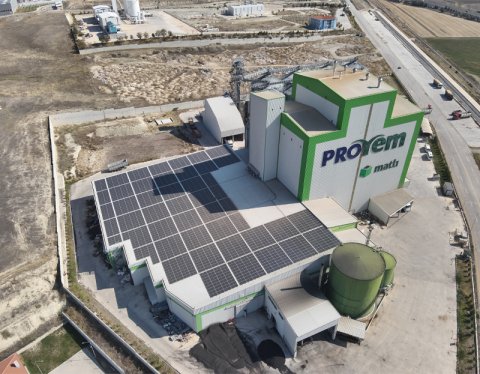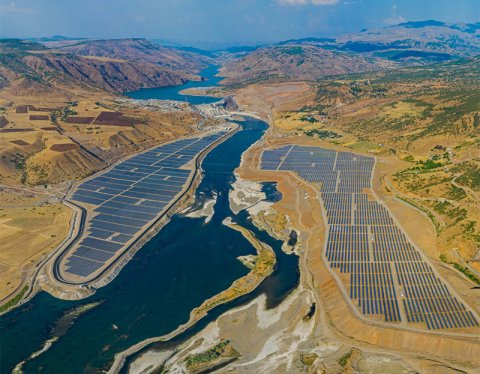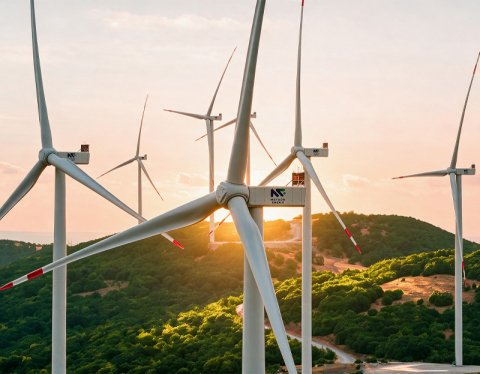








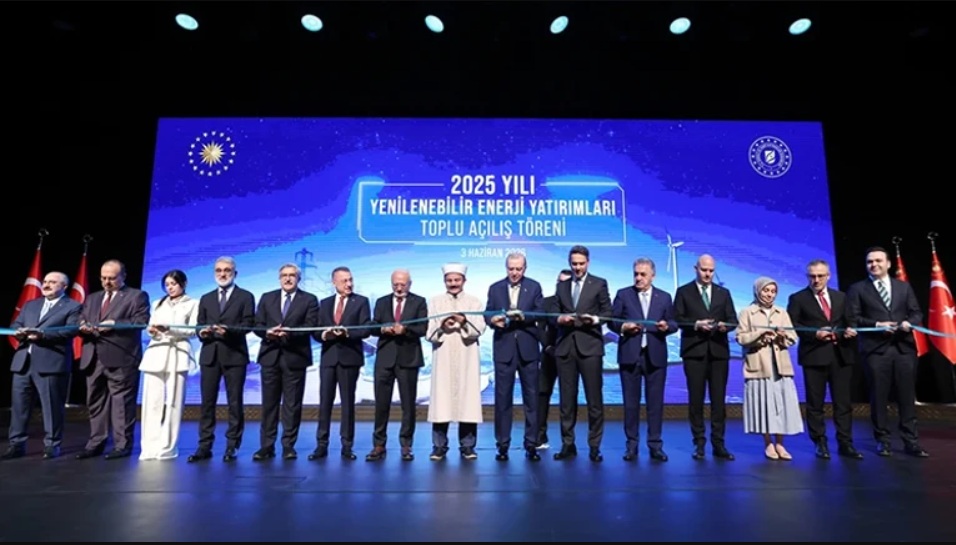
Turkey has cleared a decisive institutional hurdle within its transcontinental distribution network to reinforce baseline power security and accelerate green integration pathways. Managed under a collaborative federal oversight framework, the newly finalized Clean Energy Portfolio has officially entered commercial operations, adding 8,313 MW of electrical capacity to the interconnected transmission system. Backed by an absolute capital deployment of $6 billion, the parameters verified on June 04, 2026, represent the most expansive single-phase grid commissioning executed in the state's industrial history.
Geopolitical Friction and the Strategic Criticality of Supply Resilience
As localized manufacturing setups drive national energy requirements to double over consecutive decades, gross electricity demand configurations are on track to climb an additional 50 percent by 2035. Contemporary macro telemetry records indicate that sovereign reliance on external primary energy commodities holds steady at 57 percent, generating an annualized import liability fluctuating between $60 billion and $100 billion.
Evaluating how recent disruptions in regional transport lanes intersect with sovereign risk management, Ebru Arıcı, General Manager of Arı-Es Energy, provided a detailed industrial framework:
The structural friction observed across the Russia-Ukraine theater and recent operational vulnerabilities within the Strait of Hormuz confirm how tightly power supply resilience interfaces with sovereign durability. Energy assets are no longer managed purely as factors of economic growth; they function as primary instruments of national defense. Consequently, scaling capital deployment toward domestic, low-carbon conversion systems, mitigating external sourcing risk, and insulating transmission corridors must be treated as absolute strategic directives. Every unified infrastructure step taken within this domain structurally hardens our macroeconomic resilience and asset safety margins.
Infrastructure Optimization: Executing a $30 Billion Grid Modernization Program
According to international decarbonization commitments presented by the Ministry of Energy and Natural Resources during COP29, the state's sovereign target demands scaling total wind and solar capacity to 120,000 MW by 2035. To systematically integrate this high-volume, variable renewable energy (VRE) generation without introducing severe frequency imbalances to the high-voltage transmission grid, the government has launched a $30 billion multi-tier transmission framework. The engineering blueprint mandates the immediate construction of 30,000 kilometers of new high-voltage transmission corridors across the territory.
Emphasizing that generation spikes must be strictly paired with concurrent structural routing assets, Ebru Arıcı noted:
Sustaining organic growth across clean technology spending requires variables that move far beyond simple nominal generation metrics. Securing efficient power integration over large geographic spans demands high-capacity transmission corridors and complex, automated substation systems. Therefore, the announced $30 billion grid infrastructure asset strategy represents the single most critical component of the country's broader energy transition. To manage large-scale variable loads safely, engineering teams must execute synchronized timelines for network investments, grid-scale battery energy storage systems (BESS), and cross-border high-voltage direct current (HVDC) interconnectors.
Streamlining Regulatory Frameworks to Unlock Capital Velocity
To maintain investor confidence and preserve capital velocity across upcoming tender rounds, industry experts stress the necessity of systemic administrative optimization. Arı-Es Energy executives state that simplifying multi-tier permitting routines, accelerating Environmental Impact Assessments (EIA), and offering transparent grid-connection guarantees remain imperative to fully capture regional wind and solar capacity. Developing clear asset definitions for localized energy networks and storage systems will serve as the primary catalyst for foreign and domestic infrastructure spending moving toward the 2035 benchmarks.