







What is Viscoelastic Polyurethane Foam? A to Z Material Technology and Applications
Frequently encountered in our daily lives under the names "smart foam," "memory foam," or simply Visco, viscoelastic polyurethane foam is one of the greatest innovations polymer chemistry has offered to comfort technologies. Although consumers generally know this material from orthopedic mattresses and pillows, viscoelastic structures are an indispensable part of many high-precision sectors, ranging from automotive to medical.
So, what are the primary differences that set this special foam apart from traditional polyurethane foams? How does its biological and chemical structure adapt to human anatomy? Let’s examine this popular component of material science in full detail.
1. What is Viscoelastic Material? Terminological and Chemical Structure
The term "viscoelastic" is a combination of two fundamental concepts defining the physical behavior of the material: Viscosity (resistance to flow and deformation) and Elasticity (the ability to stretch and return to its original form).
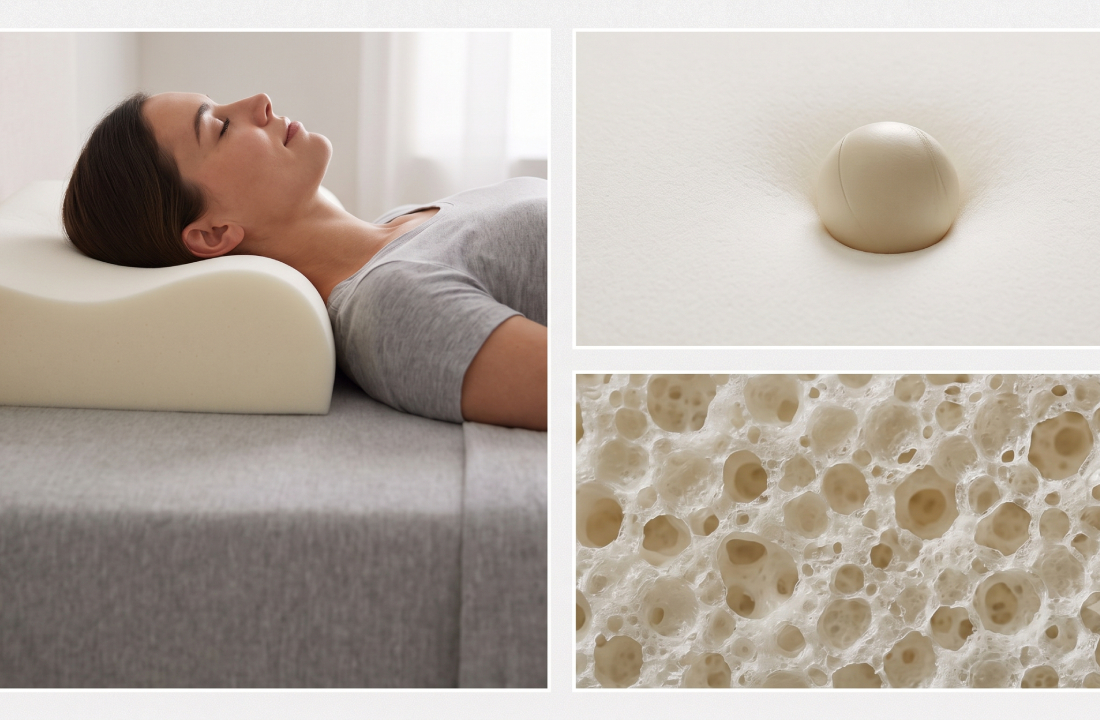
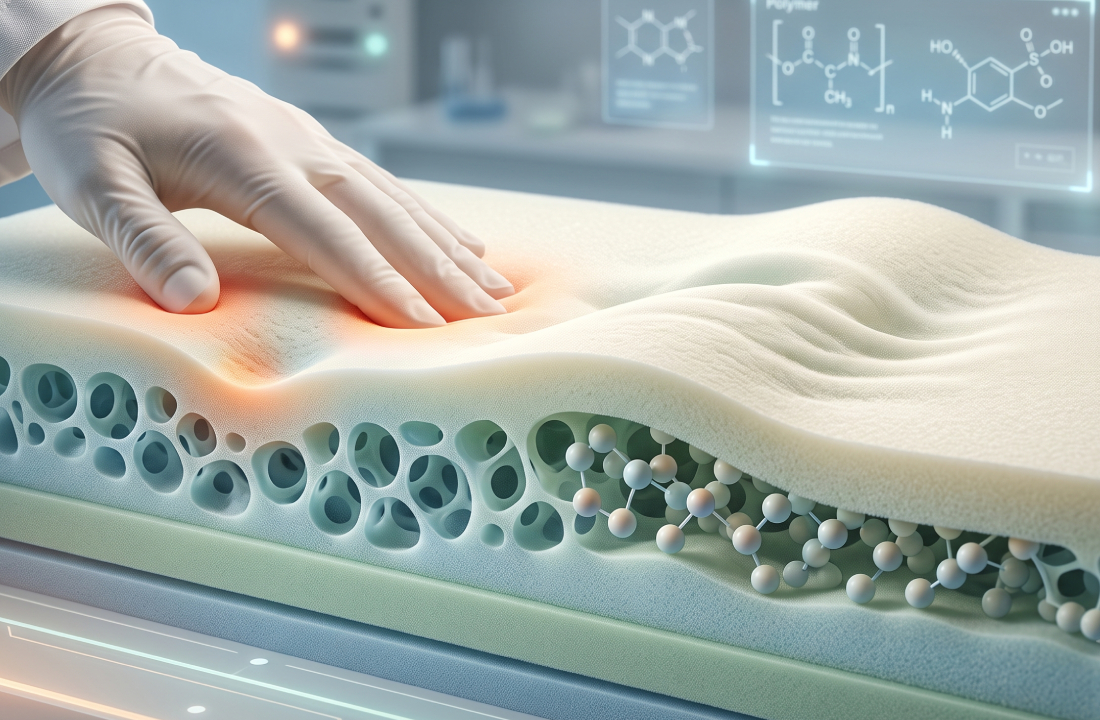
When a load is applied to traditional polyurethane foams, they react immediately and bounce back like a spring. Viscoelastic polyurethane foams, on the other hand, gradually absorb the pressure applied to them thanks to their open-cell polymer structure.
Heat and Pressure Sensitivity: The most characteristic feature of viscoelastic foams is their reaction to ambient temperature and human body heat. They soften at contact points with body heat and take the exact mold of the area where weight is applied.
Slow Recovery (Memory Effect): When pressure is removed, the foam does not instantly return to its original state; it slowly regains its initial form within a few seconds. The name "memory foam" comes from this characteristic delayed elasticity of the material.
2. Key Advantages Provided by Viscoelastic Foam
There are strong technical reasons behind the preference for viscoelastic polyurethane material in both comfort products and industrial designs:
A. Even Pressure Distribution and Point Support
On traditional surfaces, heavy parts of the body (shoulders, hips, heels) are exposed to high pressure. Viscoelastic foam, however, provides an even distribution across the entire contact surface, helping to relieve blood circulation in capillaries.
B. Vibration and Motion Isolation
The molecular structure of the material is extremely successful in absorbing impact and kinetic energy. The fact that it prevents the turning movements of partners from being transmitted to the other side in double beds stems from this energy absorption property.
C. Ergonomics and Biocompatibility
By adapting perfectly to human anatomy, it reduces muscle tension and the load on the spine, offering maximum posture support.
3. Applications of Viscoelastic Polyurethane Foam
Thanks to its wide formulation flexibility and density options, viscoelastic foams are actively used in various sectors:
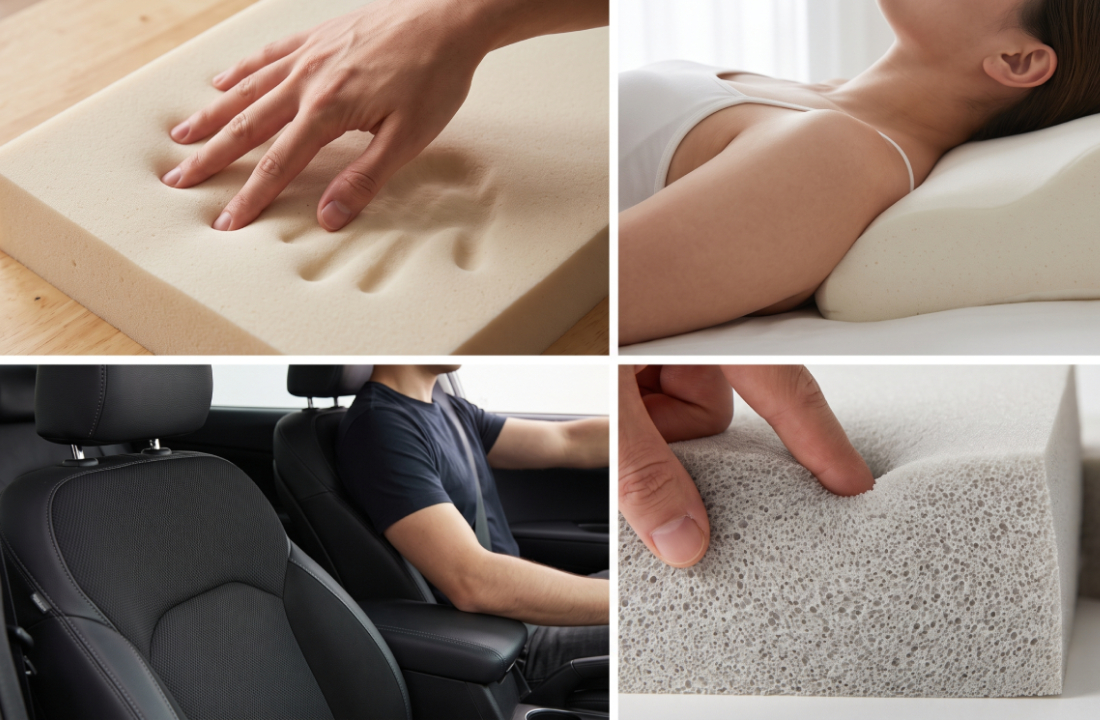
Home Textiles and Sleep Products: Mattresses, orthopedic neck pillows, mattress toppers, and seat cushions.
Medical and Healthcare Sector: Wheelchair cushions, operating table pads, and special hospital mattresses that prevent bedsores (pressure ulcers) in long-term bedridden patients.
Automotive and Aviation: Seat supports enhancing long-distance travel comfort, headrests, and special interior upholstery components requiring high vibration damping.
Protective Equipment: Athlete protective gear, helmet pads, and shoe insoles.
4. What to Consider When Shopping? (Density and Breathability)
When choosing a product containing viscoelastic polyurethane foam, the most critical factor determining material quality is the Density ($\text{kg/m}^3$) value.
High Density ($50\text{ kg/m}^3$ and Above): Offers long-lasting use, higher pressure absorption, and quality support.
Breathability: The open-cell structure of a quality viscoelastic foam must be well-designed. A porous structure provides moisture control and minimizes night sweats.
Conclusion
Viscoelastic polyurethane foam is a unique material technology where engineering, chemistry, and ergonomics converge. With its flexibility that mimics body contouring and its high pressure-damping capacity, it continues to offer solutions that enhance daily life quality and facilitate care in the medical field.