





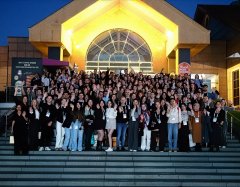
Initiated by the Saint-Gobain Sustainable Construction Observatory in Paris in 2023, the global event series convened architects, civil engineers, academicians, manufacturers, and financial leaders in Istanbul to examine local decarbonization and structural resilience priorities ahead of COP31 in Antalya.
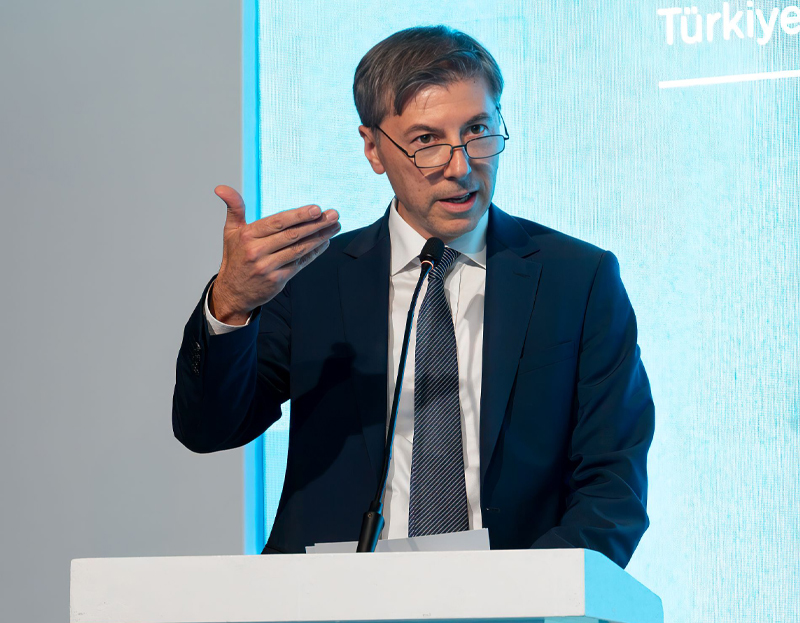
Delivering the keynote address, Murat Savcı, CEO of Saint-Gobain Turkey and President of Türkiye İMSAD, highlighted the dual challenges confronting the built environment:
The construction sector faces two concurrent imperatives: seismic risk and the climate crisis. Turkey’s seismic reality clearly demonstrates that engineering safe and resilient structures is not an optional preference, but an inescapable necessity. Concurrently, with buildings and construction accounting for roughly 40% of global carbon emissions, our sector carries a decisive role in climate mitigation. These two domains cannot be addressed in silos.
Every structure we build or renovate today must guarantee structural safety for future generations while systematically minimizing its carbon footprint. By hosting Sustainable Construction Talks in Turkey ahead of COP31, we aim to align priorities across our value chain to advance lower-carbon, resource-efficient, and earthquake-resilient infrastructure.

Industry Barometer and Expert Panels
Architect Sedat Bayrak presented findings from the Sustainable Construction Observatory Barometer—encompassing data across 30 countries—noting that while sustainability awareness remains high in Turkey, practical on-site implementation requires accelerated execution frameworks.
Two thematic panels moderated by Ilgaz Gürsoy addressed critical sector priorities:
Turkey’s Seismic Imperative: Muhammed Maraşlı (Türkiye İMSAD) stressed that structural resilience depends equally on advanced building chemistry and skilled workforce execution. Prof. Dr. Alper İlki (Istanbul Technical University & Turkish Earthquake Foundation) noted that pre-2000 building stock in Istanbul poses acute vulnerabilities, urging rapid assessment methodologies. Architect Nevzat Sayın addressed the structural legacy of uninspected urban expansion since the 1950s.
Turkey’s Climate Imperative: Prof. Dr. Ece Ceylan Baba (Yeditepe University) advocated for "adaptive reuse" to preserve urban heritage and embodied carbon. Dr. Emre Ilıcalı (President of ÇEDBİK) noted that mechanisms like the EU Carbon Border Adjustment Mechanism (CBAM) make carbon footprint a direct determinant of financial competitiveness. Onur Ünlü (CEO of ESCON Energy) outlined green financing structures supporting industrial energy efficiency and emissions reduction.