




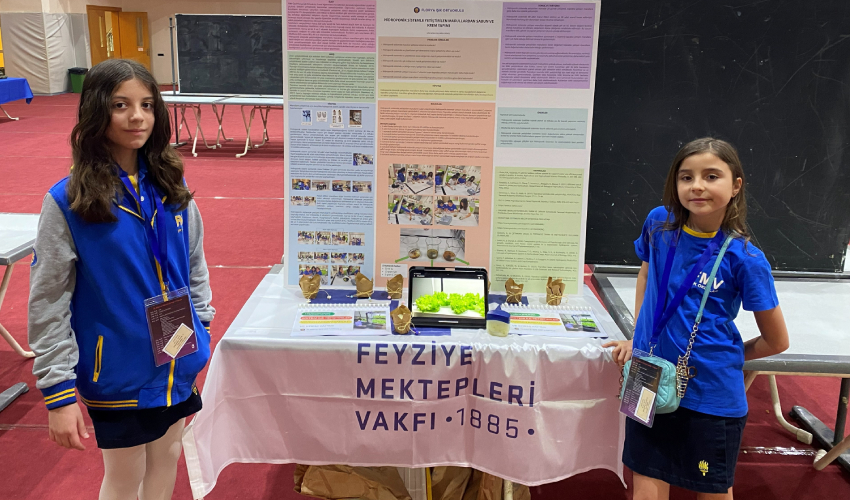
Middle school students at FMV Florya Işık Primary School in Istanbul are cultivating plants without soil using a hydroponic system installed in their science laboratory and transforming these plants into innovative products.
As part of the project, which has been ongoing for three years, students experience the entire process from seed germination to harvesting and plant extract production, applying scientific research and product development in practice.
In the hydroponic system, plants grow in a nutrient-rich water solution instead of soil. The vertically designed, multi-layer system allows many plants to be cultivated within a limited space. Students regularly measure the pH level and nutrient values of the water, enabling them to directly practice scientific measurement, data collection and analysis.
During the first year of the project, students produced natural soap and moisturizing cream from lettuce extracts grown in the hydroponic system. The project titled “Producing Soap and Cream from Lettuce Grown in a Hydroponic System” won first place at the Eyüboğlu Science Project Competition.
In the second year, the project advanced further. Students developed a plant-based shampoo formulated from lettuce extracts, called “Işık Lettuce Extract Shampoo.” The project was selected among 2,198 entries at the TÜBİTAK European Regional Exhibition, ranking among the top 13 projects and earning second place in the regional finals. It also received awards in several national science and innovation competitions.
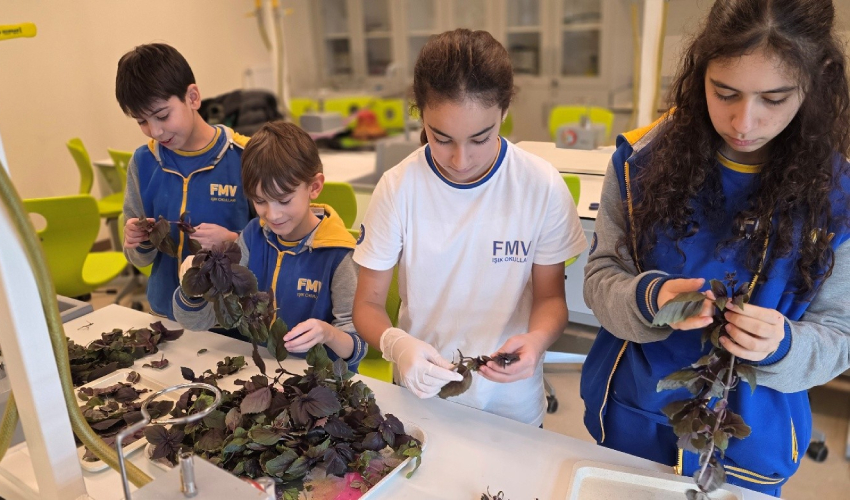
In the third year, the focus shifted toward food safety and sustainable production. Students developed a natural liquid spice from basil grown in the hydroponic system. The basil extract was formulated with olive oil, walnut oil and flaxseed oil, creating an innovative seasoning alternative that adds natural aroma to dishes. The project has been submitted to TÜBİTAK and TEKNOFEST competitions.
Beyond its educational value, the hydroponic system also demonstrates the potential of sustainable agriculture technologies. Compared with conventional farming, the system provides up to 90% water savings and allows plants to be grown year-round regardless of seasonal conditions.
The school plans to expand the project further by establishing a greenhouse on campus, aiming to cultivate medicinal and aromatic plants and develop additional value-added products from these plants.