



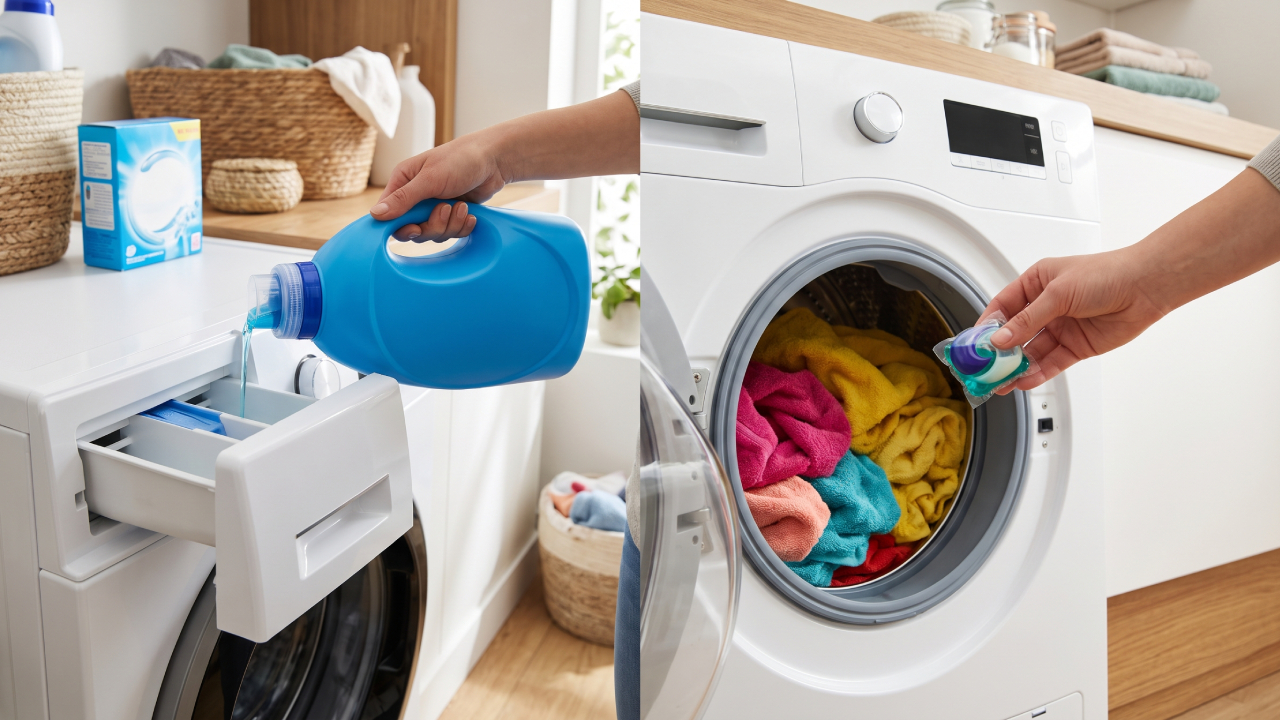
In the laundry aisle, consumers routinely face a core choice between the dosing flexibility of classic liquid detergents and the streamlined convenience of modern detergent pods. While both formats perform the same fundamental cleaning task, they differ substantially in chemical concentration, polymer encapsulation, and how they interact with wash water.
To state the scientific conclusion directly: detergent pods deliver superior cleaning power on stubborn stains and full standard loads thanks to low-water, ultra-concentrated active ingredients and multi-chamber enzyme systems. Liquid detergents, conversely, provide indispensable dosing control for small loads, short cold-water cycles, and direct pre-treatment of localized stains without leaving polymer residue behind.
The Polymer Behind Detergent Pods: Polyvinyl Alcohol (PVA)
The material science breakthrough enabling detergent pods is the transparent outer membrane that contains concentrated liquid and dissolves upon contact with water. This film is engineered from polyvinyl alcohol (PVA) or specialized PVA copolymers—synthetic, water-soluble polymers.
At room temperature in dry storage, PVA film exhibits high mechanical tensile strength, preventing active ingredients from leaking. Once inside the washing machine drum, exposure to water molecules rapidly disrupts hydrogen bonds between polymer chains, causing the film to dissolve within minutes and release its contents. Crucially, multi-chamber pod designs allow formulators to physically separate incompatible chemistries—such as oxygen-based brighteners and delicate biological enzymes—until the exact moment of dilution.

Enzyme Activity and Concentration Dynamics
The primary driver behind the cleaning performance gap between liquid and pod formats is water content. Traditional liquid detergents contain a significant percentage of water as a carrier medium, which inherently limits the maximum concentration of surfactants and stain-fighting enzymes.
Detergent pods eliminate excess water to achieve a highly concentrated matrix. Within these compact doses, biological enzymes—including proteases for protein stains, amylases for starches, and lipases for lipids—operate at elevated concentrations. Higher enzyme density accelerates biochemical catalysis even at lower wash temperatures such as 30°C or 40°C, breaking down soils from textile fibers more efficiently.
Dissolution Risks in Cold Water and Express Cycles
The concentrated nature of detergent pods can become a drawback under suboptimal washing conditions. In very cold water (20°C or below), overloaded drums, or 15-to-20-minute express cycles, insufficient mechanical agitation and thermal energy may prevent the PVA membrane from dissolving completely.
Partially dissolved polyvinyl alcohol residue can adhere to dark garments as clear, sticky patches or accumulate inside the washing machine’s rubber door gasket. Because liquid detergents are already in a fluid phase, they disperse homogeneously the instant they enter the water stream, eliminating dissolution failures during cold or rapid wash cycles.
Dosing Flexibility and Environmental Balance
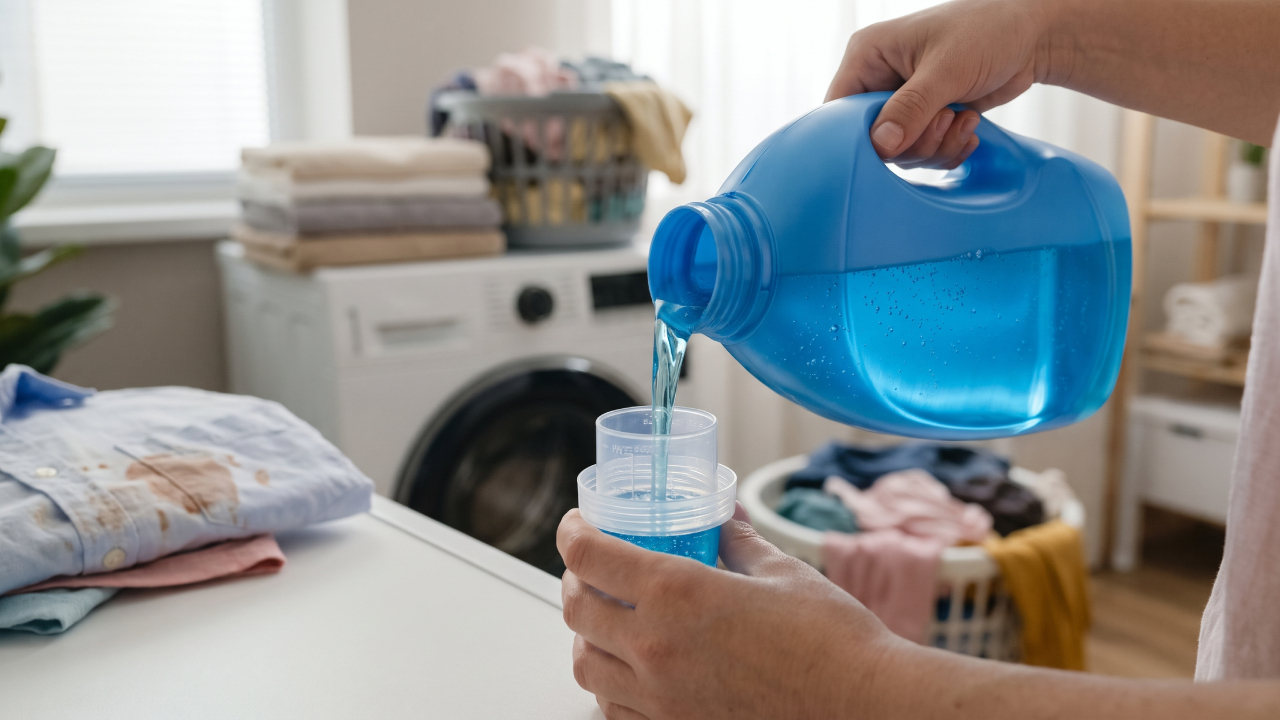
From the standpoint of textile longevity and wash economics, accurate dosing is essential. When washing lightly soiled items, half-loads, or operating in soft water regions, the fixed volume of a detergent pod delivers excess chemistry. Over-dosing generates excessive suds that impede mechanical rinsing and leave surfactant buildup within fabric weaves.
Liquid detergents allow users to scale volume precisely according to load weight, soil level, and local water hardness. Conversely, pre-measured pods prevent consumer over-pouring—a common habit driven by the misconception that more detergent equals cleaner clothes—thereby curbing unnecessary surfactant discharge into wastewater streams.
📌 In Summary
Choosing between liquid detergent and detergent pods depends directly on laundry habits and selected machine cycles. For full standard loads requiring high enzymatic stain removal and standardized dosing simplicity, multi-chamber detergent pods offer clear chemical advantages. For delicate textiles, cold express cycles, direct stain pre-treatment, and partial loads, liquid detergents remain the safer, more adaptable choice.