


From lining baking sheets to wrapping grill items, aluminum foil and parchment paper are among the most frequently used materials in modern kitchens. Often treated as interchangeable tools to prevent sticking or trap heat, these two materials respond very differently at the molecular level when exposed to elevated temperatures and varying food pH levels.
To state the scientific conclusion directly: parchment paper is the safest, chemically inert option for oven baking up to 220°C (428°F), preventing chemical migration into food. Aluminum foil, while effective as a high-temperature heat shield and oxygen barrier for neutral foods, triggers aluminum ion leaching into meals when heated alongside acidic ingredients like tomatoes, lemon, vinegar, or heavy salt.
Heat and Acid on Aluminum Foil: Metal Ion Leaching
Aluminum foil is rolled from thin sheets of pure aluminum metal, naturally forming a microscopic protective layer of aluminum oxide upon exposure to air. At room temperature and in contact with dry or pH-neutral foods, this oxide film keeps the metal stable and safe.
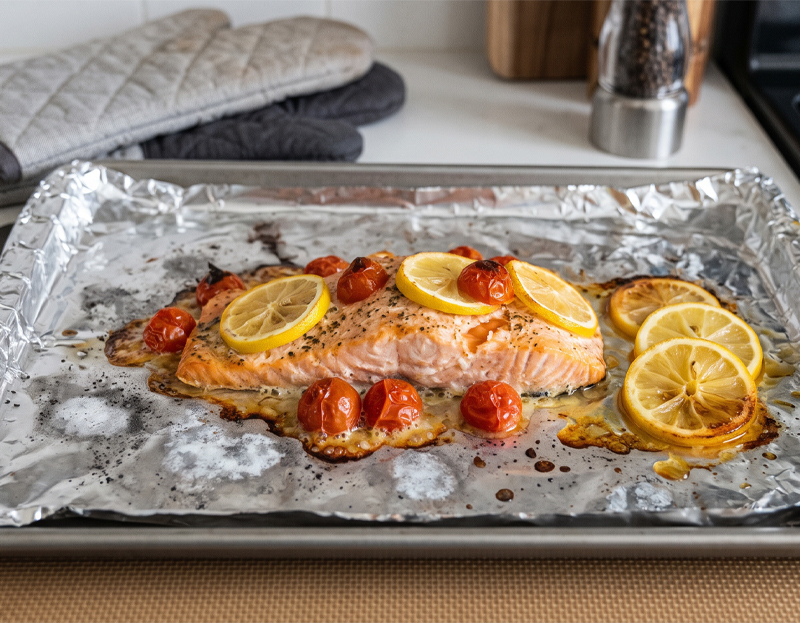
However, combining high oven temperatures (180°C and above) with acidic or saline ingredients disrupts this chemical equilibrium. Lemon juice, tomato sauces, vinegar, wine, and marinades rich in sodium chloride dissolve the protective oxide barrier, allowing free aluminum ions to migrate directly into the food matrix. Food chemistry studies confirm that baking heavily spiced, acidic meats or vegetables wrapped tightly in foil can elevate aluminum concentrations in the meal beyond tolerable weekly intake thresholds established by global health authorities.
How Parchment Paper Is Made: Silicone and Cellulose Chemistry
Despite being colloquially referred to as "greaseproof" or "oiled" paper, quality baking parchment contains neither animal fats nor vegetable oils. It is manufactured by passing high-purity cellulose pulp through a sulfuric acid bath to densify the fibers (parchmentization), followed by coating the surface with food-grade polydimethylsiloxane (silicone) polymer.
This cured silicone coating imparts low surface tension for non-stick release alongside hydrophobic water- and oil-repelling properties. Owing to the high bond energy of silicon-oxygen backbones, parchment paper remains chemically non-reactive even when exposed to acidic or salty foods, preventing ion transfer. Furthermore, choosing unbleached brown parchment eliminates chlorine-bleaching processes, avoiding trace dioxin concerns altogether.
Thermal Limits: Maximum Temperature Thresholds
The defining physical distinction between these two materials lies in their upper thermal limits. Silicone-coated cellulose parchment paper operates safely up to 220°C–230°C (428°F–450°F). Exceeding this threshold or allowing the paper to touch heating elements or open flames causes the cellulose fibers to carbonize and ignite while degrading the silicone matrix.
Aluminum foil, by contrast, has a melting point near 660°C (1,220°F). This extreme heat tolerance makes foil indispensable for open-flame grilling, ember roasting, and ultra-high-temperature culinary applications. Additionally, while aluminum foil reflects infrared radiant heat to shield surfaces from scorching, parchment paper permits controlled vapor transmission that preserves ideal moisture balance in baked goods and roasted vegetables.

📌 In Summary
Aluminum foil and parchment paper are not interchangeable substitutes; they are specialized materials suited to distinct chemical and thermal environments. For standard oven roasting, baking, and especially dishes marinated with lemon, tomatoes, or vinegar, chemically inert parchment paper is the superior choice. Aluminum foil performs best when kept away from direct contact with acidic foods—serving instead as an unmatched thermal shield above 230°C or as an oxygen- and light-blocking wrap for cold food storage.