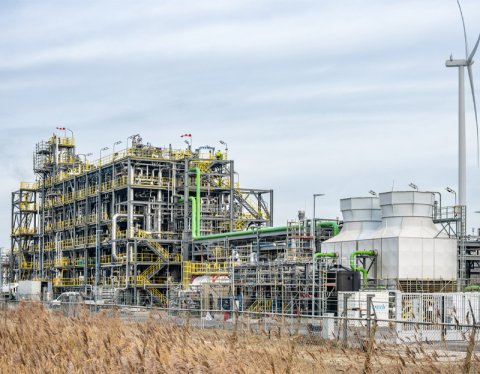







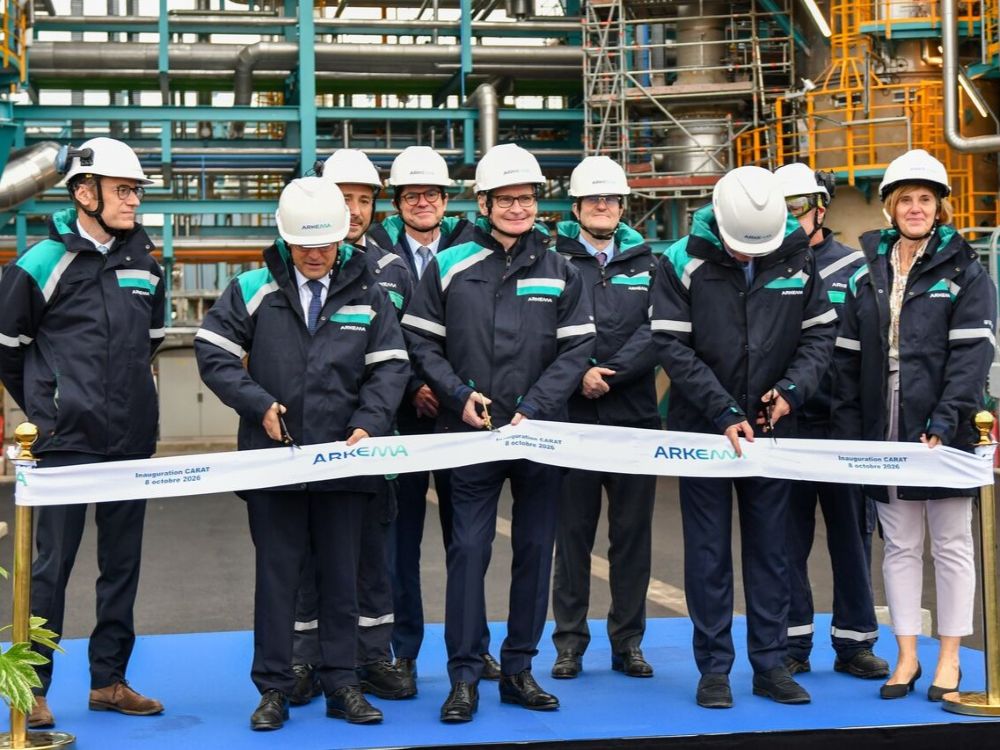
Sanctioned in 2023 with civil works starting in April 2024, the project replaces the complex's legacy acrylic acid purification line. Beyond energy savings, the upgraded configuration optimizes solvent recovery, resource circularity, and effluent treatment. The infrastructure project received financial backing from the French government's "France 2030" roadmap and EU NextGenerationEU funding via the French Agency for Ecological Transition (ADEME).
Engineering Scope and Complex Footprint
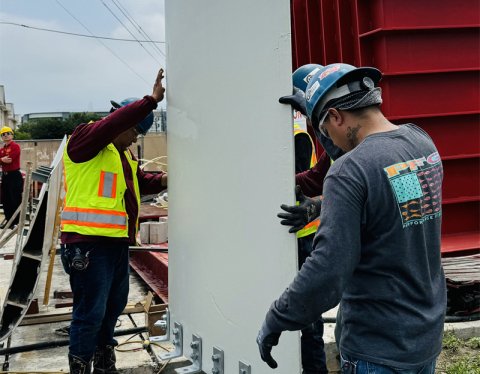
Construction milestones included the erection of 826 tonnes of structural steel, 21 kilometers of process piping, and 52 kilometers of electrical cabling. A major engineering milestone was achieved in early 2025 with the logistics and heavy lifting of a 60-meter-long, 150-tonne distillation column. The project mobilized over 200 contractors on site during peak periods, totaling roughly 600,000 work hours.
The 87-hectare Carling site:
Houses facilities for acrylic acid monomers, esters, and superabsorbent polymers (SAP), supported by an onsite acrylic technology research center.
Employs over 380 people and exports upwards of 350,000 tonnes annually to clients across 40 countries, serving coatings, industrial adhesives, water treatment, and engineered polymers.
Part of €400M Decarbonization Capex
The Carling upgrade marks an operational step within Arkema’s 2022–2030 industrial decarbonization framework, which budgets cumulative investments of up to €400 million across manufacturing assets to lift energy efficiency and drive operational emissions reductions.
Thierry Le Hénaff (Chairman and CEO of Arkema):
"With an investment of nearly €150 million, this new unit represents one of Arkema’s largest industrial projects in France. It will contribute to the Group’s ambitious climate plan, underpinned by a dedicated investment program supporting Arkema’s decarbonization, with a cumulative amount that could reach €400 million over the 2022-2030 period."
Stéphane Séjourné (Executive Vice-President of the European Commission):
"Europe must keep its chemical industry. There can be neither industrial sovereignty nor strategic autonomy if we allow the essential building blocks of our economy to leave. Carling is showing the way forward: nearly €150 million invested to produce in Europe, using less energy and generating less carbon, while building on decades of industrial know-how. This is exactly the model we want to promote: decarbonizing without deindustrializing, investing in our regions, and making our industrial hubs the driving forces of our future."