




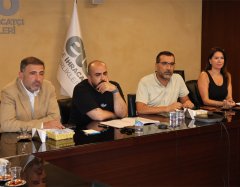
TÜRKÇİMENTO, the apex institutional body representing the Turkish cement manufacturing sector, has re-aligned its industrial manufacturing configurations to mitigate emerging European Union Carbon Border Adjustment Mechanism (CBAM) liabilities. Built to concurrently manage ecological compliance, structural automation, and human capital growth, the organization's "Triple Transformation" directive was formally released alongside comprehensive real-sector data on June 05, 2026. The certified indices reveal significant progress in alternative fuel adoption, mineral co-processing, and Waste Heat Recovery (WHR) optimization across heavy kiln lines.
Circular Economy Diagnostics: Utilizing 2.3 Million Tons of Alternative Fuel Inputs
To insulate high-temperature clinker processing phases against fluctuating fossil-energy markets, domestic manufacturers have scaled up industrial co-processing infrastructures, tracking the following quantitative metrics:
Alternative Fuel Volumes: During the audited 2025 data cycle, absolute alternative fuel utilization reached 2.3 million tons, allowing the sector to source 13.2 percent of its thermal energy requirements from verified circular biomass and industrial by-products.
Mineral Co-Processing Efficiency: To optimize primary resource depletion factors, manufacturers integrated 7.7 million tons of alternative raw materials as mineral modifiers inside operational raw mills.
Renewable Power Sourcing: Grid-scale solar (GES), wind (RES), and waste heat capture arrays systematically cross-load regional networks, provisioning approximately 10 percent of the industry’s total electrical consumption profile through green energy assets.
Thermomechanical Power Capture: 164.5 MW of WHR Delivering Baseload Electricity
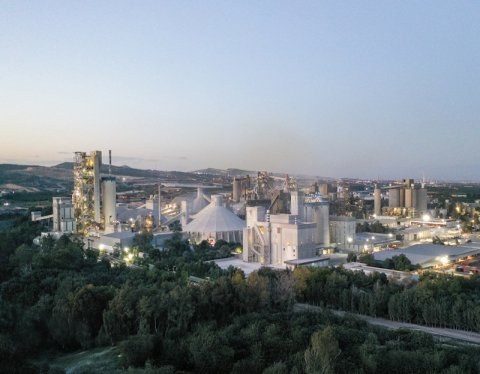
A primary engineering achievement deployed across the manufacturing baseline is the extensive integration of high-performance Waste Heat Recovery (WHR) systems. Contemporary engineering audits confirm that 27 localized lines across 17 integrated cement plants now handle a combined WHR generation capacity of 164.5 MW.
By capturing high-temperature exhaust gas fields directly from the preheater and clinker cooler systems, this infrastructure generates an electrical output equivalent to the collective daily household consumption of 658,000 residential domiciles (approximately 2.6 million individuals). This clean, captured electrical energy systematically supplies up to 30 percent of the baseline grid requirements for the host manufacturing plants.
"Sustainability Metrics and Institutional Competitiveness Are Rigidly Connected"
Operating under the Turkish Cement Sector Low-Carbon Roadmap managed by the Ministry of Industry and Technology, the industry's strategic trajectory to hit its 2053 net-zero greenhouse gas mandate calls for a combined capital expenditure (CapEx) program of $30 billion targeting Carbon Capture, Utilization, and Storage (CCUS), energy storage, and automation engineering.
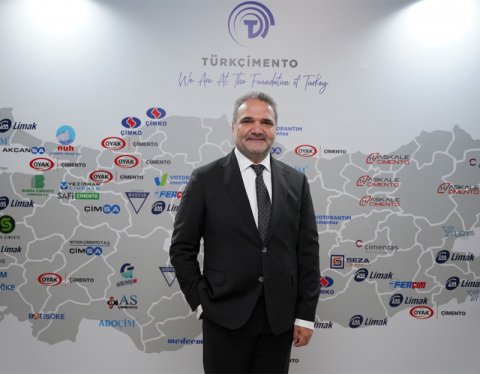
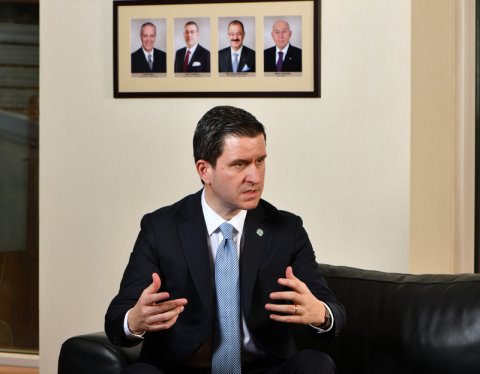
Analyzing how demanding border carbon tariffs intersect with cross-border trade flow security, Volkan Bozay, CEO of TÜRKÇİMENTO, detailed the institutional perspective:
As a sector, we view green transformation not merely as an external environmental obligation, but as a foundational pillar of sustainable growth and global competitiveness. By unifying digitalization, sustainability, and human-centric metrics, we are engineering tomorrow's production landscape. Today, sustainability and sovereign commercial leverage are rigidly connected. The European Green Deal, CBAM, and evolving carbon pricing metrics are accelerating industrial transformation. We position this process not as a commercial risk, but as a definitive strategic vector to advance our manufacturing strength and export capability. Our investments spanning from carbon capture technologies to advanced energy efficiency and digital diagnostics ensure we fulfill our ecological duties while expanding Turkey's sustainable development indicators.