







Systemic supply chain blockades, targeted industrial cyber-attacks, and critical climate-induced disruptions are forcing a profound reconfiguration of risk management models across global heavy asset processing lines. Moving beyond isolated health and safety tracking, the Cement Industry Employers’ Association (ÇEİS) has executed a macro-governance intervention by establishing the Risk and Business Continuity Committee. Documented through strategic frameworks on June 11, 2026, the council is engineered to transform traditional individual factory risk mapping into a data-driven, aggregated enterprise resilience ledger running across the entire domestic cement manufacturing base.
Enforcing Systemic Durability via TS EN ISO 22301 Standards
The operational architecture of the committee relies heavily on the audited criteria of the TS EN ISO 22301 Business Continuity Management System standard. Designed to insulate high-thermal processing lines and continuous-clinker operations against sudden system shutdowns, the framework enforces a strict cyclical security logic:
Threat and Materiality Diagnostics: Real-time logging and profiling of localized environmental, mechanical, and external supply elements capable of causing unscheduled downtime.
Dynamic Containment Formulations: Developing standardized emergency response playbooks and target Recovery Time Objectives (RTO) calibrated to preserve capital infrastructure.
Performance Telemetry Auditing: Running continuous audits on corporate response velocity during simulated infrastructure failures to structurally lower operational vulnerability gaps.
The Multi-Layered Matrix of Heavy Manufacturing Risk Pipelines
Analytical models compiled by ÇEİS experts indicate that heavy industry risks do not operate as localized anomalies; instead, they function as an interdependent, cascading sequence. The structural risk indices monitored by the committee are classified across three primary dimensions:
Operational and Safety Hazards: High-severity events—including dust explosions, industrial fires, workplace injuries, and structural kiln damage—generate immediate employee safety liabilities while triggering lengthy production halts.
Technological Vulnerabilities: As mills adopt Industry 4.5 automations, the expansion of connected SCADA architectures introduces severe exposure to ransomware, cloud database blockades, and industrial network blackouts.
Human Capital and Readiness Gaps: Delays in technical upskilling and uncoordinated management reflexes during acute crises directly extend the timeline required to return assets to baseline capacity.
"Aggregating Anonymous Micro-Data to Construct a Sovereign Risk Inventory"
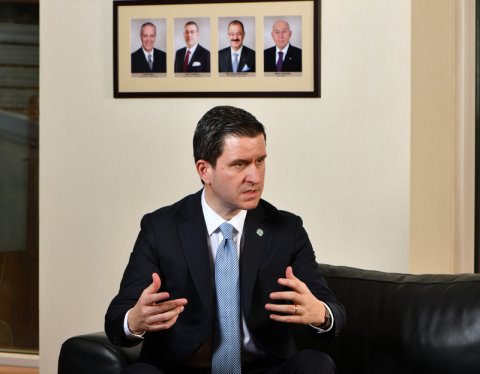
Detailing the data-governance models and predictive analytics utilized by the council, Dr. H. Serdar Şardan, Secretary General of ÇEİS, outlined the strategic industrial targets:
Business continuity operates as a critical discipline dedicated to constructing defense mechanisms against severe operational disruptions, ensuring core processing lines remain functional under crisis parameters. Incidents such as industrial blazes, explosions, severe utility disruptions, or catastrophic mechanical failures represent our primary exposure risks. Because these threat vectors generate multiple cascading consequences simultaneously, evaluating them under narrow, single-topic vertical structures is no longer viable. Through our Risk and Business Continuity Committee, we are systematically ingesting raw data from our connected member facilities to build a master industrial risk inventory. By evaluating these data flows within an anonymous, aggregated analytical matrix, we can effectively prioritize high-risk sectors and deploy our specialized research investments where they are needed most.
This cooperative framework allows independent corporate entities within the heavy manufacturing space to share best practices, modernizing the sovereign defense architecture of the sector against unexpected macroeconomic and physical shocks.