







According to consolidated data shared by the Machinery Exporters’ Association, Türkiye’s machinery sector managed to increase its exports in value terms during the first four months of the year.
Total machinery exports, including free zones, rose by 4.5% compared to the same period last year and reached $9.3 billion. While the quantity of exported machinery declined by 6.7%, the average export price per kilogram increased by 12% to $8.6. As a result, the sector generated $350 million more in exports despite the decline in volume.
Annualized machinery exports increased by 1.3% to $29.1 billion, while machinery imports rose by 8.2% over the previous 12 months to $47.2 billion.
Strong Growth in Germany and the U.S.
Exports to Germany, Türkiye’s leading machinery export market, increased by 14.1% in the first four months of the year, reaching $1.1 billion.
The U.S. market posted an even stronger momentum, with machinery exports rising by 39.5% to $767 million. Italy maintained its third-place position with $442 million in exports, up 12.7%.
By contrast, Iraq, Russia and Poland were among the major markets where machinery exports recorded the sharpest declines.
Internal Combustion Engines Lead Exports
By subsector, the highest export volume was recorded in internal combustion engines and components, which reached $867 million with a 6.4% increase.
Construction and mining machinery exports stood at $629 million, while pumps and compressors reached $530 million.
The strongest proportional increase was seen in turbines, turbojets and hydraulic cylinders, with a rise of 40.1%. The steepest decline was recorded in leather processing machinery, down 52.2%.
New Barriers Are Emerging in Global Competition
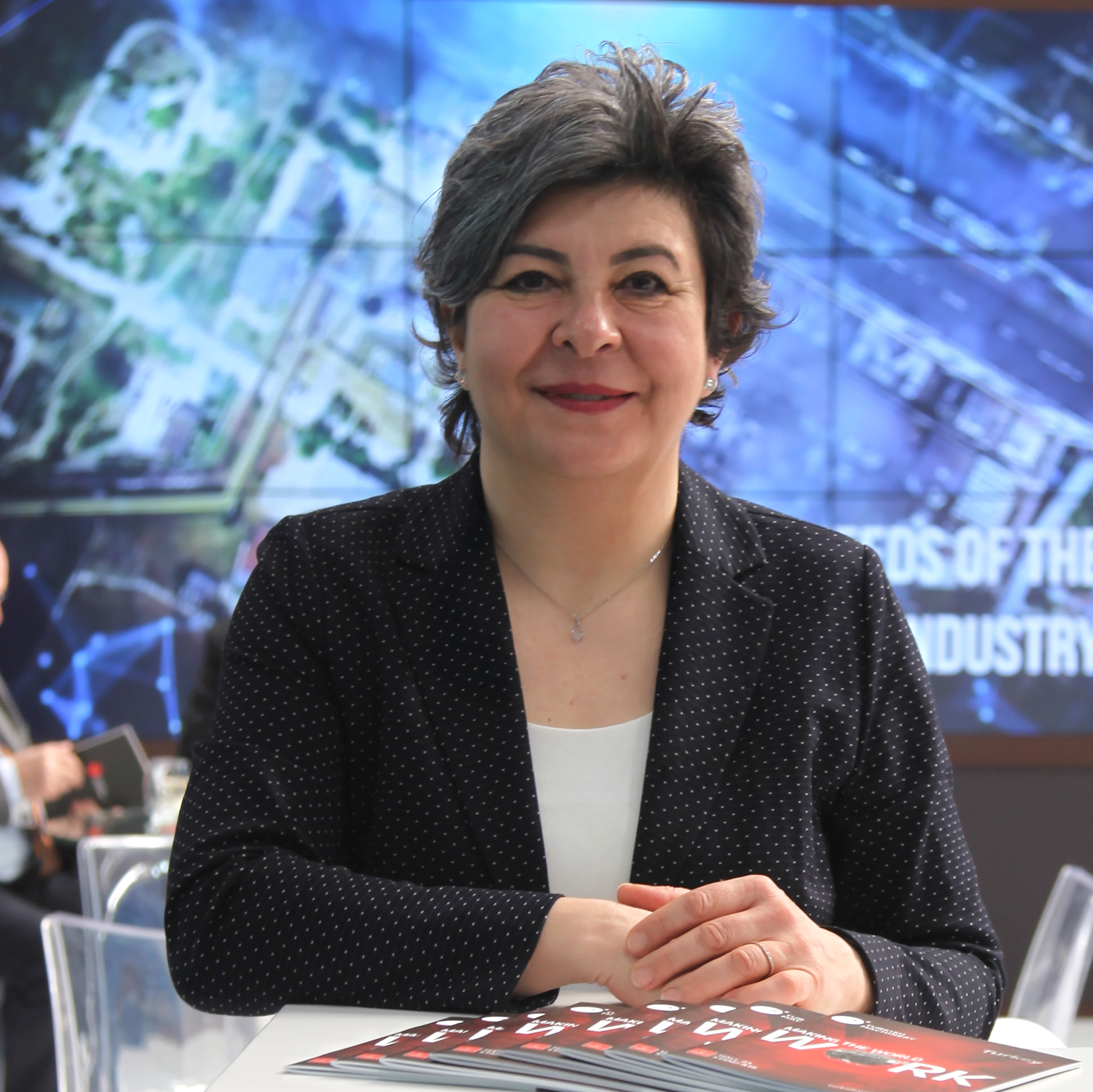
Sevda Kayhan Yılmaz, Chair of the Machinery Exporters’ Association, emphasized that security concerns, geopolitical tensions and technology wars are creating new areas of protectionism in global trade.
According to Yılmaz, vulnerabilities in energy supply, rising defense spending in Europe and intensifying technology competition between the U.S. and China are reshaping not only market conditions, but also production and certification processes for the machinery industry.
Highlighting the need for a new adaptation process in line with the defense industry’s specific regulatory and certification requirements, Yılmaz said:
The existing high-technology production lines of our machinery industry need to go through an integration process fully compatible with the specific regulatory and certification requirements of the defense industry. However, this transformation must proceed in the shadow of the technology wars that have recently escalated again between the U.S. and China, destabilizing global supply chains, in a complex labyrinth where every step collides with the interests of another actor.
Emphasis on Turkish Machinery as a Trusted Partner
Yılmaz stated that Türkiye follows a proactive approach by maintaining dialogue with all its trade partners. She added that the machinery sector carries this approach onto the field through fairs and trade delegations across different continents.
Yılmaz underlined that the sector aims to strengthen the identity of Turkish machinery as a reliable, flexible and solution-oriented partner. She noted that the industry is adapting to the West’s new-generation protectionist criteria focused on cybersecurity and low carbon, while also competing with the East’s advantages in technological raw materials and production.
Warning on Bottlenecks in Financing Channels
While the machinery sector supports public measures aimed at easing the burden on manufacturers, it also stresses that financial bottlenecks must be resolved for these steps to create lasting impact.
Yılmaz said the corporate tax reduction introduced under the Investment Incentive Package is an important step for protecting the domestic supply chain and financing companies’ transformation processes in global markets.
However, restrictions on foreign currency loans, high commission costs and difficulties in accessing foreign currency-denominated resources are narrowing exporters’ financial maneuvering space. According to Yılmaz, financial instruments need to be designed through an integrated approach, from tax reductions to credit markets.
“Resources Should Be Directed Selectively to Strategic Sectors”
Yılmaz emphasized that capacity increases and technological renewal investments in industry should not be assessed solely through short-term efficiency indicators.
She noted that global uncertainties, geopolitical risks and the imbalance between exchange rates and inflation have temporarily weakened the competitiveness of industrial companies. The main priority, she said, should be to create a sustainable investment environment for technology-developing sectors.
Yılmaz stated that eliminating technical bottlenecks in financial markets and directing resources selectively to strategic sectors would help revitalize Türkiye’s economy.
Transforming the existing capacity of the machinery industry into high productivity through a comprehensive strategy stands out as one of Türkiye’s strongest tools in the fight against the current account deficit and inflation.