






The “Chemistry” Exhibition At Deutsches Museum: An Interactive Journey From Alchemy To Nuclear Fission, From Everyday Life To High Technology
Munich – One of Germany’s leading institutions for science and technology, the Deutsches Museum, invites visitors to explore the past and present of chemistry through its exhibition titled “Chemistry – Transformation, Experimentation And Application”, located at the museum’s Museum Island (Museumsinsel) site in Munich. The exhibition aims to make chemistry more accessible through historical laboratory reconstructions, hands-on experimental areas, and everyday-life themes.
Exhibition Structure: Three Main Sections
The exhibition is designed around three main sections, offering visitors a coherent narrative experience.
Historical Laboratories
The first section takes visitors through a timeline that begins with medieval alchemy and continues into the 19th century, referencing the era of Justus von Liebig. Through period-style reconstructions, the exhibition presents key stages in the development of chemistry.
Experimental Area
At the heart of the exhibition is an experimental area featuring interactive units, a laboratory section, and a classroom/lecture space that highlights learning through practice. The museum notes that chemistry demonstrations are held throughout the day with changing themes, and that the daily schedule is published each morning as part of the museum’s programme.
Thematic Main Hall
The main hall is divided into thematic zones that connect chemistry to daily life. According to the museum, the exhibition explores chemistry through subjects such as nutrition, raw materials and industry, analytics, construction, sports, and leisure, showing how chemical processes shape everyday experiences.
Highlights And Key Displays
A Giant Periodic Table
One of the exhibition’s most striking features is its large, interactive periodic table area. The museum explains that visitors can explore the relationship between atomic structure and the periodic system, and learn about elements through this display.
An Original Setup Connected To The Discovery Of Nuclear Fission
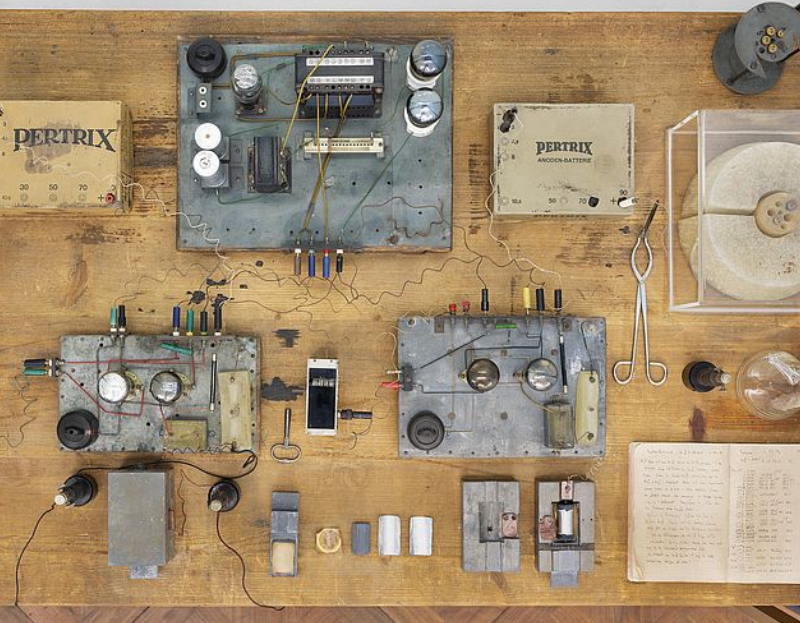
Another major highlight is a section dedicated to the discovery of nuclear fission, linked to experiments conducted in 1938 using uranium salts. The museum states that original instruments connected to this scientific milestone are on display.
The Visitors’ Laboratory
The Deutsches Museum also offers a Chemistry Visitors’ Lab programme connected to the exhibition. According to the museum, visitors can try basic laboratory techniques such as shaking, filtering, and distilling, and carry out sample analyses. The programme also includes reservation-based sessions for groups and school classes.
From The Curator: A Child-Friendly Route Through The Exhibition
In the museum’s press material, exhibition curator Susanne Rehn-Taube draws attention to the exhibition’s approach of combining modern chemistry with historical laboratories and interactive areas. The same material also notes that the exhibition includes a dedicated route designed for children.