







Highlighting that subjecting Turkey—a Customs Union partner for nearly 30 years—to the same restrictions as any third country undermines competitiveness, Uysal noted that the allocated quota leaves a tight margin even against current export momentum and will constrain exports as hybrid production capacity expands.
M. Fatih Uysal: “Aimed at Drawing Investments to Europe Instead of Turkey”
Urging that the measure be assessed through industrial policy and investment flows rather than trade figures alone, M. Fatih Uysal, Chairman of the Board of the Aegean Ferrous and Non-Ferrous Metals Exporters’ Association, stated:
“We cannot view this decision separately from industrial policies aimed at shifting the direction of global automotive investments. We are concerned that this restriction on hybrid car imports is being used as a tool to make it harder for foreign automakers to build factories in Turkey to serve the European market and to draw those investments directly to EU countries. For foreign investors, Turkey’s biggest attraction has been seamless access to the European market through the Customs Union. If exports to Europe from a factory built in Turkey are capped by a quota, investors will favor EU countries directly. A new automotive factory in our country means far more than vehicles rolling off the line; it strengthens our supply industry, opens new markets for our metals sector, brings technology to the country, and creates qualified employment. Every automotive investment we lose means losing this entire industrial ecosystem.”

Cascading Risks for Supply Industry and Metals
Pointing out that the supply industry accounted for $15.8 billion of Turkey’s roughly $41.5 billion automotive exports in 2025, Uysal underscored the broader impact of potential investment shifts alongside the upcoming “Made in Europe” provisions under the Industrial Accelerator Act:
“Alongside its main manufacturers, Turkey possesses a world-class, highly capable automotive supply industry. New investments coming to our country feed a massive production chain—from companies supplying parts directly to automakers to suppliers providing raw materials and intermediate goods. If new investments shift to Europe, the growth path of our suppliers will be blocked, and new orders and capacity expansion plans will be shelved. Furthermore, if the ‘Made in Europe’ rule under the Industrial Accelerator Act discussed in EU institutions goes against us, we will face the risk of losing even existing foreign-owned plants, let alone attracting new ones. Main manufacturers moving production lines to Europe and suppliers following them would mean an industrial capacity loss for Turkey that is very difficult to recover.”
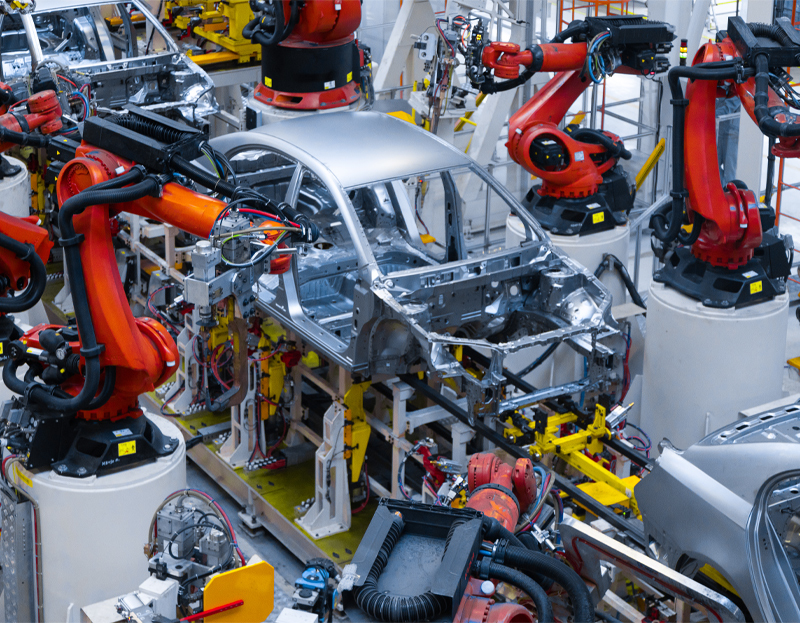
Emphasizing that hot- and cold-rolled flat steel, galvanized sheets, specialty steels, aluminum raw materials, sheets and profiles, castings, copper wires, cables, and metal fasteners are core automotive inputs, Uysal noted that Turkish metals producers must capture rising demand for aluminum and copper in hybrid and electric vehicles. He concluded:
“If Europe wants to boost its global competitiveness, it must abandon policies that exclude Turkey. We are not an ordinary trading partner to the European automotive and metals industry, but an integral part of its production and supply chain. Our expectation is that Turkey is completely exempted from the hybrid car quota. Even if that cannot be achieved, quota calculations must account not only for our current production, but also for our planned new investments. Likewise, under the ‘Made in Europe’ framework, Turkish-origin products and domestic manufacturing must be recognized as part of the European ecosystem. In this regard, we expect our Minister of Trade and all relevant ministries to firmly pursue diplomatic initiatives and lobbying efforts before the EU.”